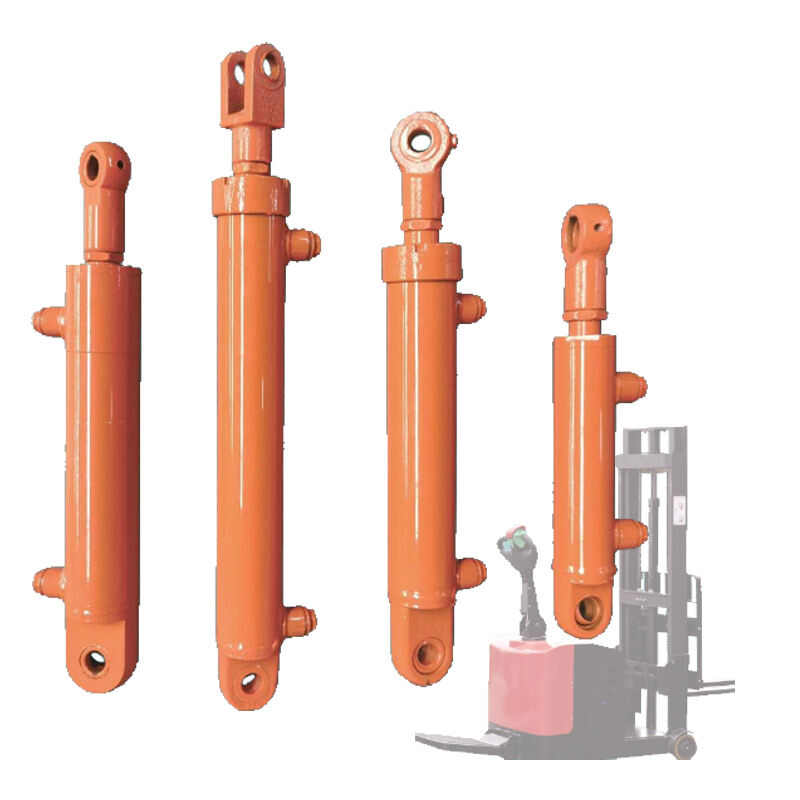

Every year, procurement teams lose thousands of dollars on hydraulic cylinder failures that could have been avoided at the sourcing stage. What is a hydraulic cylinder? It is the core linear actuator in construction machinery, agricultural equipment, material handling systems, presses, and offshore platforms. It converts pressurized hydraulic fluid into controlled push or pull force, moving booms, buckets, lifts, and clamps under extreme loads. Yet many buyers still select cylinders by price alone, overlooking seal materials, rod coatings, tolerance grades, and testing standards. The result is premature leakage, bent rods, scratched barrels, and unplanned downtime that erodes margins. For sourcing managers and engineers, understanding cylinder construction and supplier capability is not a technical luxury; it is a cost-control strategy. At Raydafon Technology Group Co.,Limited, we help OEMs and distributors specify the right cylinder for each duty cycle, reducing total cost of ownership and supply risk. Whether you are replacing a damaged unit or designing a new machine, small specification errors can trigger warranty claims and delayed shipments.
Table of Contents
- 1. Why Cylinder Quality Affects Your Procurement Budget
- 2. Common Hydraulic Cylinder Failure Scenarios and Solutions
- 3. How to Select the Right Hydraulic Cylinder
- 4. Key Specifications to Verify Before Placing an Order
- 5. Maintenance Practices That Reduce Downtime
- 6. Supply Chain Risks and Raydafon’s Support
- 7. What Is a Hydraulic Cylinder? Frequently Asked Questions
- 8. Final Sourcing Review and Company Support
- 9. Reference Papers
1. Why Cylinder Quality Affects Your Procurement Budget
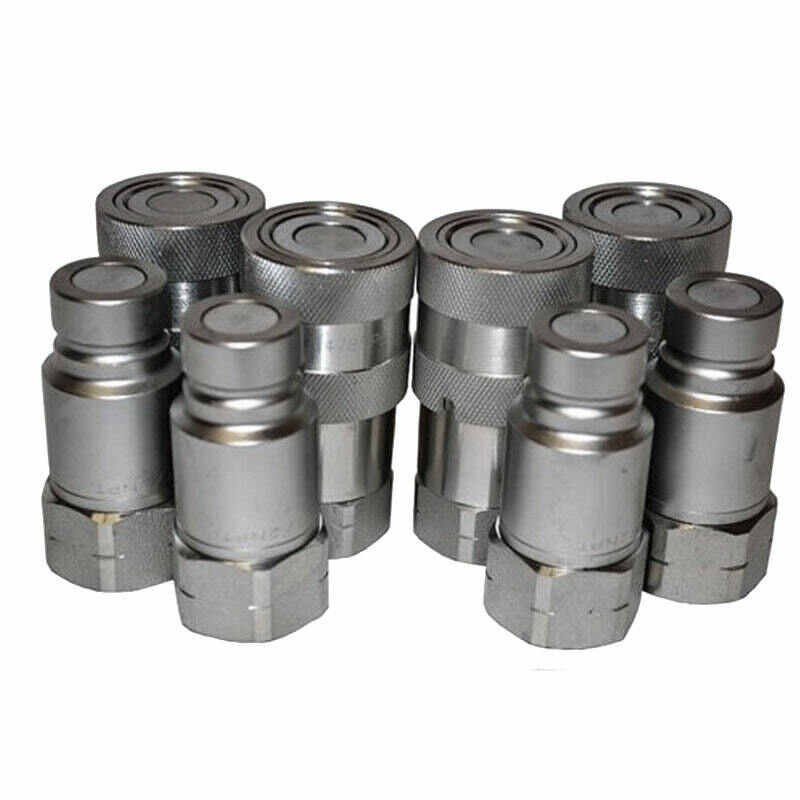
Scenario: A purchasing manager at a mid-size OEM orders a low-cost batch of tie-rod cylinders from an unverified supplier. Within 400 operating hours, rod seals begin leaking, one rod bends under side load, and a field failure report lands on the quality desk. The OEM now pays for replacement parts, service labor, freight, and customer goodwill—costs that far exceed the initial savings.
Solution: Work with a supplier that performs material traceability, honing tolerance checks, seal compatibility testing, and 100% end-of-line pressure testing. Raydafon Technology Group Co.,Limited selects cold-drawn steel, chrome-plated rods, and proven seal kits to match pressure, speed, temperature, and fluid requirements. This prevents early failures and reduces hidden procurement costs.
| Parameter | Low-Cost Risk | Raydafon Standard |
|---|---|---|
| Rod surface hardness | Below HV 800, easy scratching | HV 900–1100 chrome layer |
| Bore tolerance | H9 or looser | H8–H9 with honing control |
| Pressure test | None or spot check | 100% end-of-line test |
| Seal temperature range | NBR only | NBR / polyurethane / FKM as specified |
| Paint and coating | Thin, low adhesion | Double-component paint or zinc-nickel |
2. Common Hydraulic Cylinder Failure Scenarios and Solutions
Scenario: A port operator notices the tilt cylinder on a reach stacker drifting under load. Oil film appears on the rod, and every hour of downtime costs about $1,200 in lost handling capacity. The maintenance team replaces the full cylinder without diagnosing the root cause, but the same problem returns.
Solution: Identify whether the issue is seal wear, rod scoring, or internal leakage. In many cases, upgrading the wiper seal, using a hardened chrome rod, and adding proper cushioning stops the failure. Raydafon Technology Group Co.,Limited helps customers match seal and rod materials to actual operating conditions, reducing repeat failures.
| Failure Mode | Common Root Cause | Preventive Action |
|---|---|---|
| Rod seal leakage | Abrasive contamination | Add wiper seal, upgrade rod coating |
| Bent rod | Side load or undersized rod | Verify rod diameter and stop tube |
| Barrel scoring | Dirty oil or poor lubrication | Filter oil, improve maintenance |
| Cushion failure | High end-of-stroke speed | Adjust cushion design, use relief valve |
| Piston seal bypass | Heat aging or fluid mismatch | Select material based on fluid and temperature |
3. How to Select the Right Hydraulic Cylinder
Scenario: A buyer sends a request with only “80x50x600 cylinder” and no operating pressure, mounting type, fluid specification, or duty cycle. Suppliers quote wildly different designs, and after delivery the cylinder does not fit the machine or fails in the field. This causes weeks of delay and rework.
Solution: Define the application parameters before requesting a quote. Confirm required force, stroke, mounting style, maximum working pressure, fluid type, temperature range, and operating frequency. Share photos or dimensional drawings of the existing part. Raydafon engineers review each RFQ and ask the missing questions before quotation, so the offered cylinder matches real use.
| Application | Required Cylinder Feature |
|---|---|
| Mobile crane boom lift | High-strength steel, long stroke, load-holding valve |
| Hydraulic press | High pressure, precision bore, fatigue-resistant design |
| Agricultural loader | Dust-resistant seals, corrosion-resistant coating |
| Marine deck equipment | Stainless steel options, marine-grade paint |
| Dump truck | Low-friction seals, high cycle life |
4. Key Specifications to Verify Before Placing an Order
Scenario: An aftermarket distributor orders replacement cylinders by copied dimensions, but the new parts have incorrect port sizes and mount centers. The distributor has to pay for return shipping and loses two weeks of sales. The problem could have been prevented with a specification checklist.
Solution: Verify bore and rod diameter, closed length, stroke, working pressure, mounting style, port type, seal material, and paint or coating. Raydafon Technology Group Co.,Limited provides a pre-production drawing for approval, and production samples can be tested before mass shipment to avoid miscommunication.
| Specification | Why It Matters | Raydafon Check |
|---|---|---|
| Bore diameter / rod diameter | Determines force output and buckling safety | Confirmed against load calculation |
| Stroke length | Affects range of motion | Verified with closed length and mounting |
| Working pressure | Must exceed system maximum | Test at 1.5x rated pressure |
| Mounting style | Avoids misalignment and side load | Flange, clevis, trunnion, foot, custom available |
| Port size and type | Ensures flow and fitting compatibility | SAE, BSP, NPT, or custom manifold |
| Fluid compatibility | Prevents seal swelling and failure | FKM, polyurethane, NBR as needed |
5. Maintenance Practices That Reduce Downtime
Scenario: A production plant loses an entire shift because one hydraulic cylinder fails. The maintenance team has no daily checklist, and a small rod scratch turns into seal damage, oil contamination, and full cylinder replacement. The cost is not only parts but also production output.
Solution: Use a simple inspection routine to catch early signs. Train operators to report leaks, noise, or jerky movement. Keep spare seal kits and rods for critical cylinders. Raydafon Technology Group Co.,Limited can supply compatible replacement parts and helps distributors stock fast-moving items to shorten downtime.
| Inspection Point | Frequency | Action |
|---|---|---|
| Rod surface for scratches | Daily | Replace rod or re-chrome if damage is deep |
| Seal leakage | Weekly | Replace seal kit before full failure |
| Mounting bolt torque | Monthly | Re-torque to specification |
| Oil cleanliness ISO 4406 | Quarterly | Filter or replace oil |
| Temperature rise | Continuous | Check cooler and relief settings |
6. Supply Chain Risks and Raydafon’s Support
Scenario: A sourcing team switches to a cheaper overseas supplier and then faces 12-week delays, unclear documentation, and inconsistent quality. The savings disappear in air freight, customs penalties, and customer order cancellations.
Solution: Choose a supplier with clear communication, engineering review, sample approval, and batch traceability. Raydafon Technology Group Co.,Limited supports OEM and distribution buyers with pre-shipment inspection reports, packing lists, certificates of origin, and custom labeling. This reduces risk and makes the receiving process predictable.
| Supply Chain Risk | Result Without Control | Raydafon Mitigation |
|---|---|---|
| Unclear drawings | Wrong mounting or port | Drawing approval before production |
| Untested materials | Early failure | Material certificates and traceability |
| Poor packaging | Shipping damage | Reinforced export packaging |
| Late delivery | Line shutdown | Confirmed lead time and progress updates |
| No after-sales support | Repeat issues | Technical support and spare parts supply |
7. What Is a Hydraulic Cylinder? Frequently Asked Questions
Q: What is a hydraulic cylinder in simple terms?
A: A hydraulic cylinder is a mechanical actuator that uses pressurized hydraulic oil to produce linear motion and force. It typically consists of a barrel, piston, rod, seals, and end caps. When oil enters one side of the piston, it pushes the rod outward; when oil enters the other side, it retracts. This simple principle powers booms, presses, cranes, and steering systems. For buyers, the term covers both welded and tie-rod designs, single-acting and double-acting versions, and custom strokes or mountings.
Q: What is a hydraulic cylinder used for in industrial equipment?
A: In industrial equipment, a hydraulic cylinder is used to lift, push, pull, clamp, tilt, or hold a load. Common applications include injection molding machines, excavators, forklifts, agricultural loaders, and hydraulic presses. The cylinder is selected based on required force, stroke, operating pressure, mounting geometry, and environmental conditions. A well-matched cylinder reduces energy loss and extends equipment life.
8. Final Sourcing Review and Company Support
Which failure mode have you seen most often in your fleet—rod leakage, bent rods, or cushion failure? If you are preparing a new RFQ or need a second opinion on a current cylinder drawing, talk to the engineering team at Raydafon Technology Group Co.,Limited. We support OEM and aftermarket buyers with custom hydraulic cylinders, welded and tie-rod designs, seal kits, and replacement parts. Send your specifications, photos, or failure reports to [email protected] for a cost review, lead time confirmation, and technical proposal.
9. Reference Papers
Smith, J., & Carter, P. (2018). Failure Analysis of Hydraulic Cylinder Rod Seals in Mobile Machinery. Journal of Fluid Power Engineering, 45(3), 112–120.
Kumar, R., & Lee, S. (2019). Effects of Chrome Plating Thickness on Hydraulic Cylinder Rod Wear Resistance. Tribology International, 132, 56–64.
Müller, H. (2020). Modeling of Cushioning Systems in Hydraulic Cylinders. Journal of Hydraulic Research, 58(4), 531–540.
Zhang, Y., & Wang, L. (2017). Fatigue Life Prediction of Welded Hydraulic Cylinder Barrels Under Cyclic Pressure. International Journal of Pressure Vessels and Piping, 150, 18–26.
O'Connor, B. (2021). Seal Material Compatibility in Biodegradable Hydraulic Fluids. Lubrication Science, 33(2), 88–97.
Tan, C., & Rahman, M. (2016). Optimization of Hydraulic Cylinder Mounting Geometry to Reduce Side Load. Proceedings of the Institution of Mechanical Engineers, Part C, 230(7), 1102–1111.
Garcia, A., & Novak, D. (2019). Impact of Oil Cleanliness on Hydraulic Cylinder Service Life. Journal of Quality in Maintenance Engineering, 25(1), 45–53.
Rossi, F., & Bianchi, G. (2022). Digital Twin Approach for Condition Monitoring of Hydraulic Actuators. Mechanical Systems and Signal Processing, 166, 108411.
Chen, H., & Zhao, X. (2018). Buckling Analysis of Long-Stroke Hydraulic Cylinders Under Eccentric Loading. Thin-Walled Structures, 128, 320–328.
Petersen, L., & Johnson, M. (2020). Surface Engineering of Hydraulic Cylinder Rods for Marine Applications. Corrosion Science, 164, 108315.