Language

Picture a maintenance planner on a Friday afternoon, staring at two quotations: one for a compact rigid coupling at a low unit price, another for a YOX 560 fluid coupling with a higher upfront cost. The line is scheduled to restart Monday, the conveyor starts under load, and the motor has already tripped twice this month. The buyer asks the question that decides the project: What is the difference between a YOX 560 fluid coupling and a rigid coupling? A rigid coupling locks the motor and driven shaft together mechanically, so torque, shock, and torsional vibration pass straight through the train. A YOX 560 fluid coupling transmits torque through hydraulic oil between an impeller and a runner, creating controlled slip during start-up, softening shock loads, and adding a hydraulic cushion that a rigid coupling cannot provide. That difference is not academic. It changes motor sizing, start-up current, overload exposure, maintenance intervals, and the total cost of ownership. Raydafon Technology Group Co.,Limited helps procurement teams move from a price comparison to a duty-based selection: input speed, driven equipment inertia, start frequency, load profile, alignment condition, and spare-parts plan. The right answer is rarely “the cheapest coupling.” It is the coupling that protects the drivetrain and keeps the line running. This guide breaks down the practical differences, the parameters that matter in an RFQ, and the questions to ask before you approve the purchase.
In this guide
Pain scenario: A procurement team receives a request for a replacement coupling on a heavily loaded conveyor. The rigid coupling looks simple, compact, and inexpensive. The YOX 560 fluid coupling costs more and requires oil filling, so the first instinct is to treat it as an optional upgrade. Weeks later, the rigid coupling has transferred every shock and torsional pulse into the gearbox, bearing temperatures are rising, and the motor still trips on start-up. The purchase price was low, but the downtime cost is not.
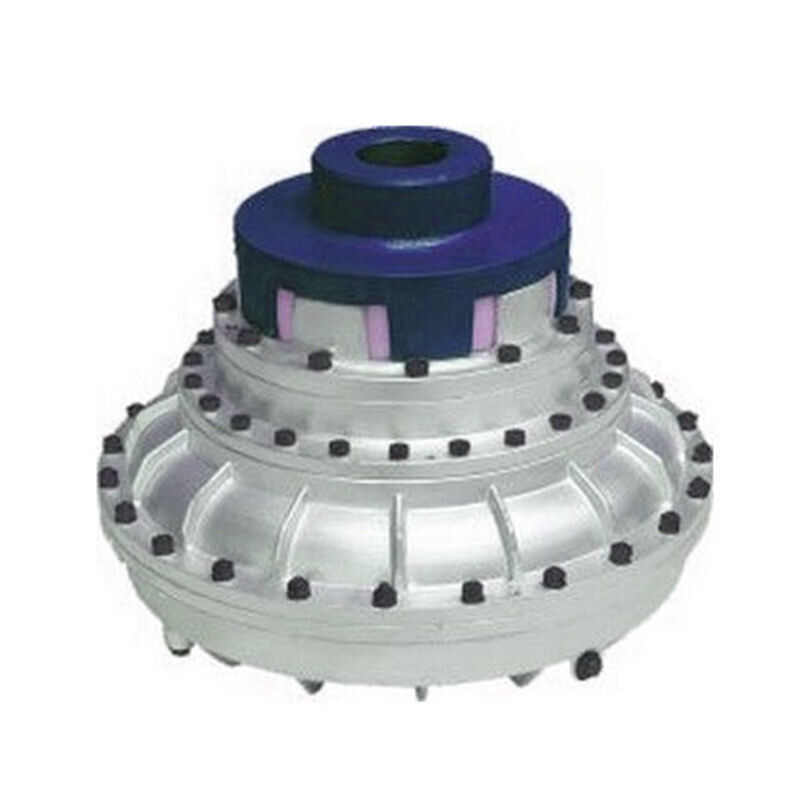
Solution: Compare the two products by how they handle torque, not by how they look on a quote. A rigid coupling provides a fixed mechanical connection. It is excellent for precisely aligned, lightly loaded, steady-state drives where no soft start is required. A YOX 560 fluid coupling uses hydraulic oil to transmit torque from the impeller to the runner. During acceleration, controlled slip limits the torque peak, reduces starting current, and cushions shock loads. For conveyors, crushers, mixers, fans, and pumps with high inertia or frequent starts, that hydraulic cushion protects the motor, gearbox, and driven machine. Raydafon Technology Group Co.,Limited supports buyers with duty-based selection so the coupling is sized to the real load profile, not to a catalogue page.
| Parameter | YOX 560 fluid coupling | Rigid coupling | Procurement impact |
|---|---|---|---|
| Torque transmission | Through hydraulic oil; controlled slip during acceleration | Mechanical lock; no slip | YOX 560 changes start-up behaviour and peak loads |
| Torsional shock | Damped by the hydraulic circuit | Passed directly to the drivetrain | Lower shock exposure for gearbox and bearings |
| Start-up current | Soft start reduces motor current peak | Motor must accelerate the full inertia | May affect motor sizing and electrical protection |
| Overload protection | Can include fusible plug and controlled slip | No built-in hydraulic overload cushion | YOX 560 may reduce nuisance trips and mechanical damage |
| Maintenance | Oil level, seals, fusible plug, routine inspection | Simple, but alignment and shock control are critical | Different spare-parts and service plan |
The practical answer to What is the difference between a YOX 560 fluid coupling and a rigid coupling? is this: a rigid coupling is a direct mechanical joint, while a YOX 560 fluid coupling is a hydraulic torque transmitter with controlled slip. For a procurement officer, that means the YOX 560 should be evaluated as drivetrain protection, not merely as a coupling line item.
Pain scenario: A belt conveyor is started fully loaded. The rigid coupling forces the motor to accelerate the belt, gearbox, and material from zero speed almost instantly. The motor draws a high current peak, the protection relay trips, and the operator restarts the line repeatedly. Each restart adds heat and mechanical stress. The maintenance team blames the motor, but the real issue may be the coupling selected for the duty.
Solution: Use a YOX 560 fluid coupling where soft start, frequent starting, or overload cushioning is needed. The fluid coupling allows slip during acceleration, so the motor reaches speed with a lower torque peak and the driven machine accelerates more gradually. This is especially valuable for high-inertia loads and applications with limited electrical capacity. Raydafon Technology Group Co.,Limited reviews motor curve, load inertia, start frequency, and ambient conditions before recommending oil fill and coupling size. The company can also help buyers specify the correct fusible plug and spare-parts set for maintenance planning.
| Selection factor | YOX 560 fluid coupling | Rigid coupling |
|---|---|---|
| Starting torque | Limited and smoothed by slip | Motor torque transmitted directly |
| Start frequency | Better suited to frequent starts | High stress if starts are frequent |
| Overload event | Slip and fusible plug can protect the train | Shock may reach gearbox or shaft |
| Motor sizing | May allow a more economical motor selection | Must cover full starting duty |
| Oil fill and commissioning | Requires correct fill volume and checks | No oil circuit |
If the application has a high-inertia fan, a loaded conveyor, or a crusher that starts under material, the YOX 560 fluid coupling is usually the stronger technical choice. If the drive is small, precisely aligned, and starts only occasionally without shock, a rigid coupling can still be a sensible low-cost option. The key is to let the duty decide.
Pain scenario: A purchasing officer is told that a fluid coupling “solves alignment problems.” That is an oversimplification. A YOX 560 fluid coupling can damp torsional vibration and shock, but it does not remove the need for proper shaft alignment. A rigid coupling, meanwhile, demands very accurate alignment because it has no flexible element. When alignment is poor, both designs can suffer, but the failure mode and maintenance plan are different.
Solution: Treat alignment, oil condition, and spare parts as part of the purchasing decision. For a rigid coupling, focus on precision alignment, bolt torque, and inspection after shock events. For a YOX 560 fluid coupling, focus on alignment, oil level, oil condition, seal condition, and fusible plug inspection. Raydafon Technology Group Co.,Limited provides installation guidance and practical spare-parts recommendations so the maintenance team knows what to check and what to keep on the shelf. This is where a lower-priced coupling can become expensive if it is chosen without a maintenance plan.
| Maintenance point | YOX 560 fluid coupling | Rigid coupling |
|---|---|---|
| Torsional vibration | Hydraulic damping reduces transmission | Transmits vibration directly |
| Shaft alignment | Still required; do not rely on the coupling to correct it | Critical; poor alignment raises stress quickly |
| Routine inspection | Oil level, leaks, seals, fusible plug | Bolts, fit, alignment, signs of shock |
| Spare-parts plan | Seals, oil, fusible plugs, wearing parts | Bolts, keys, replacement coupling |
| Typical risk | Low oil level or contaminated oil | Shock and misalignment damage |
The maintenance difference is not simply “more” versus “less.” It is a different maintenance routine. Buyers who plan for oil checks and correct installation get the benefit of soft start and shock absorption. Buyers who expect a fluid coupling to compensate for poor alignment will be disappointed.
Pain scenario: An RFQ lists only shaft diameter, speed, and quantity. Suppliers quote different products, and the buyer cannot compare them fairly. A rigid coupling quote may look cheaper because it excludes soft-start benefits, oil fill, and overload protection. A YOX 560 quote may look higher because it includes a hydraulic circuit and commissioning data. Without a common checklist, the comparison is incomplete.
Solution: Ask for duty data and total cost of ownership. Raydafon Technology Group Co.,Limited helps procurement teams build a clear comparison so the technical and commercial teams can approve the right option with confidence. Include the driven machine, load inertia, start frequency, ambient conditions, electrical limits, maintenance capability, and spare-parts strategy in the RFQ.
| RFQ item | Why it matters | Raydafon support |
|---|---|---|
| Motor power and speed | Defines torque capacity and coupling size | Selection review |
| Driven equipment inertia | Determines start-up behaviour and slip requirement | Duty calculation |
| Start frequency and load at start | Shows whether soft start is necessary | Application recommendation |
| Alignment and maintenance access | Affects installation and service plan | Installation guidance |
| Spare parts and oil | Avoids unplanned downtime | Spare-parts list |
| Total cost of ownership | Captures downtime, energy, and maintenance | Commercial comparison support |
For SEO-minded buyers searching for a YOX 560 fluid coupling supplier, the strongest RFQ is the one that includes operating context. A rigid coupling may win on initial price, but a YOX 560 fluid coupling may win on start-up reliability, overload protection, and long-term drivetrain protection. Raydafon Technology Group Co.,Limited can help make that comparison visible before the purchase order is issued.
Q: What is the difference between a YOX 560 fluid coupling and a rigid coupling when the conveyor starts under load?
A: A rigid coupling creates a direct mechanical connection, so the motor must accelerate the full load immediately and shock loads pass into the gearbox. A YOX 560 fluid coupling transmits torque through oil, allowing controlled slip during acceleration. That soft-start behaviour reduces the current peak, cushions shock, and gives the motor and driven machine a smoother start. Raydafon Technology Group Co.,Limited reviews start frequency, load inertia, and motor data to recommend the right oil fill and coupling configuration.
Q: Can a YOX 560 fluid coupling replace a rigid coupling in every application?
A: No. A rigid coupling remains suitable for small, precisely aligned, steady-state drives where soft start and overload cushioning are not needed. A YOX 560 fluid coupling is the better fit when the drive has high inertia, frequent starts, shock loads, or a need for overload protection. The decision should be based on duty, not on a generic rule. Raydafon Technology Group Co.,Limited helps buyers identify where a fluid coupling adds real value and where a simpler rigid coupling is technically adequate.
| Quick question | Short answer |
|---|---|
| Need soft start? | Choose YOX 560 fluid coupling |
| Need simple direct drive with low shock? | Rigid coupling may be sufficient |
| Need overload cushioning? | YOX 560 fluid coupling with correct protection |
Make the next RFQ easier. Send your motor power, driven equipment, start frequency, load inertia, and alignment notes to Raydafon Technology Group Co.,Limited. The team can help you compare a YOX 560 fluid coupling with a rigid coupling, prepare a practical spare-parts plan, and reduce the risk of choosing by purchase price alone. Raydafon Technology Group Co.,Limited is a hydraulic coupling and drivetrain solutions supplier serving industrial buyers who need clear selection support, dependable products, and responsive technical communication. Visit https://www.raydafonhydraulics.com or email [email protected] with your duty data and the subject line “YOX 560 vs rigid coupling.” Share this guide with your maintenance and procurement teams, and let Raydafon help turn a difficult coupling decision into a clear, documented choice.
Research references
Zhang, Y., & Wang, L., 2018, “Dynamic characteristics of hydrodynamic fluid couplings in belt conveyor drives,” Proceedings of the Institution of Mechanical Engineers, Part C: Journal of Mechanical Engineering Science, 232(14).
Liu, H., Chen, M., & Zhao, Q., 2020, “Soft-start performance of YOX-type fluid couplings under variable load,” Advances in Mechanical Engineering, 12(6).
Kaya, D., & Yagmur, E. A., 2008, “Energy efficiency in belt conveyor systems,” Energy Conversion and Management, 49(8).
Slepyan, L. I., & Krylov, S., 2016, “Torsional vibration control in hydrodynamic transmissions,” Journal of Sound and Vibration, 371.
Hou, Y., & Li, X., 2019, “Hydraulic torque transmission and overload protection of fluid couplings,” International Journal of Fluid Machinery and Systems, 12(3).
Wang, Q., Sun, J., & Li, R., 2021, “Start-up transient analysis of fluid coupling driven motors,” IEEE Transactions on Industry Applications, 57(4).
Mucchi, E., & Dalpiaz, G., 2014, “Dynamic modelling of fluid couplings for industrial drives,” Mechanism and Machine Theory, 78.
Zhu, Z., & Chen, Y., 2017, “Oil film behaviour in hydrodynamic fluid couplings,” Tribology International, 115.
Rao, S. S., 2011, “Mechanical vibrations and coupling selection for rotating machinery,” Journal of Vibration and Control, 17(9).
Patel, R., & Kumar, A., 2022, “Life-cycle cost comparison of rigid and fluid couplings in bulk material handling,” Journal of Engineering Design and Technology, 20(2).
-