Language

Picture this: a plant manager calls you at 6:00 AM. A key conveyor has stopped, and the maintenance team says the gearbox is making a grinding noise. Your first thought is, “What is a mechanical transmission gearbox?” Yes, you know the answer, but under pressure every detail matters. A Mechanical Transmission Gearbox is a gear-based power transfer unit that changes speed, torque, and direction between an input shaft and an output shaft. It consists of gears, shafts, bearings, seals, and a rigid housing, and it is used in conveyors, mixers, hoists, crushers, and many other industrial machines. For a procurement professional, this definition is not theoretical. It is the starting point for finding a reliable replacement that fits the existing mounting, handles the real load, and avoids premature failure. Raydafon Technology Group Co.,Limited understands that buyers need clear specifications, fast cross-referencing, and dependable supply. This guide breaks down the key facts, common pain points, and specification tables so you can buy with confidence.
In simple terms, a mechanical transmission gearbox is a gear-driven assembly that adjusts speed and torque between a power source and a load. Instead of using belts or fluids as the main transfer medium, it relies on meshing gear teeth. The input shaft receives rotation from an electric motor, engine, or turbine. Inside the casing, staged gear pairs either reduce speed and increase torque, or increase speed and reduce torque. The output shaft then drives a machine such as a conveyor, mixer, crusher, or hoist.
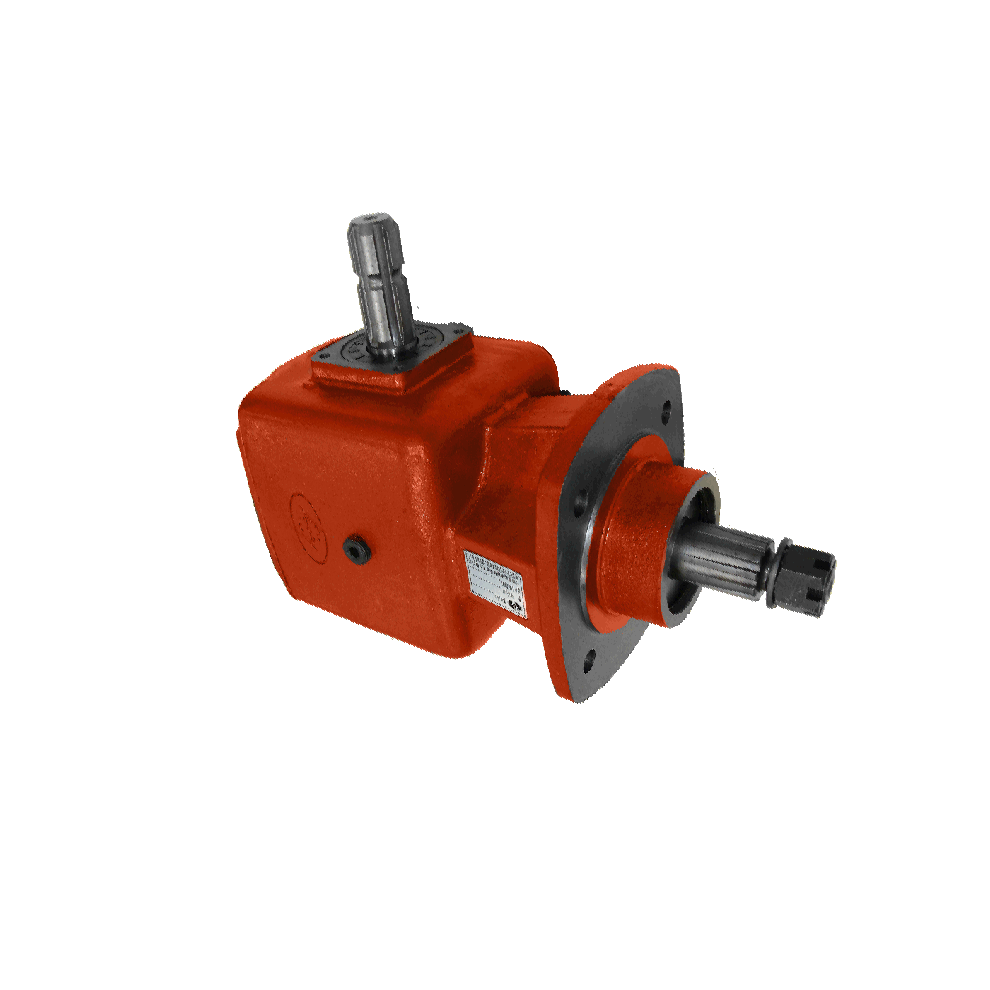
For procurement teams, the definition matters because a gearbox is not a universal part. Even small differences in center height, shaft diameter, flange pattern, or service factor can make a unit unusable. Common gear arrangements include helical, bevel, worm, and planetary. Helical units offer smooth, high-efficiency power transmission. Worm units provide high reduction in a compact size but generate more heat. Bevel units change shaft direction. Planetary units pack high torque into a small diameter. Raydafon Technology Group Co.,Limited helps buyers match these choices to actual operating conditions instead of guessing from a catalog photo.
Imagine a beverage plant where a palletizer gearbox locks up during peak production. The buyer rushes to find the cheapest “same ratio” unit and approves the order within an hour. Six weeks later, the replacement also fails. The root cause was not a manufacturing defect but a low service factor and wrong thermal rating. The original unit was designed for shock loads, while the replacement was rated for smooth conveyors only. Unplanned downtime cost far more than the price difference.
This is a common procurement trap. Many buyers compare only ratio and horsepower because those numbers are easy to find. But a gearbox also has a service factor, duty cycle, starting frequency, ambient temperature, and mounting orientation. If these are ignored, the gearbox may overheat, leak oil, or break gear teeth. The solution is to create a simple data sheet before requesting quotes. Raydafon Technology Group Co.,Limited supplies a clear specification form that captures these details. This prevents rushed buying mistakes and gives procurement teams a defensible record for future audits.
When you send a request to Raydafon Technology Group Co.,Limited, the first step is not a price. It is a fit check. We ask for input speed, output speed or ratio, continuous torque, peak torque, shaft orientation, and mounting position. If you only have an OEM part number, we cross-reference it against available designs. If the original is obsolete, we propose a compatible replacement with the same mounting envelope and an equal or higher service factor.
The goal is to keep your machine running without modifying the base plate, guards, or connecting shafts. That reduces installation time and keeps total cost under control. For larger orders, we can prepare inspection reports, heat treatment certificates, and packing lists with your required documentation.
| Check item | Typical buyer input | Why it matters |
|---|---|---|
| Input speed | Motor RPM, frequency | Affects gear pitch line velocity and heat generation |
| Required ratio | Output speed or ratio | Sets number of reduction stages |
| Continuous torque | N·m or lb·ft | Determines gear size and bearing life |
| Peak torque | Start-up or shock load | Sets service factor and overload margin |
| Mounting position | Foot, flange, or shaft mount | Affects oil level and lubrication design |
| Ambient conditions | Temperature, dust, washdown | Drives seal and paint specifications |
This simple table prevents the most expensive mistake in industrial sourcing: buying a gearbox that fits the space but cannot survive the load.
Once the application data is clear, compare candidate gearboxes using more than the purchase price. Four parameters often decide whether a unit will deliver years of service or fail early: service factor, thermal capacity, efficiency, and backlash. Service factor is the ratio between the gearbox’s rated power and the actual demand. For shock loads, a service factor of 1.4 to 2.0 is common. Thermal capacity matters for worm and high-ratio units because heat degrades oil and seals. Efficiency affects energy cost over the unit’s lifetime. Backlash is important for positioning systems but less critical for simple conveyors.
| Specification | Basic unit | Heavy-duty unit | Recommended for |
|---|---|---|---|
| Service factor | 1.0 | 1.75 | Conveyor with frequent starts or shock loads |
| Efficiency per stage | 94% | 98% | Continuous operation to reduce energy waste |
| Thermal limit | Limited | Extended housing or cooling | High ambient temperature or long duty cycle |
| Backlash | Standard | Reduced | Servo or positioning applications |
| Housing material | Cast iron | Cast iron or ductile iron | Heavy lifting and shock-prone machines |
Raydafon Technology Group Co.,Limited supplies both standard and heavy-duty configurations, so you do not have to force one design into every application.
Q: What is a mechanical transmission gearbox in simple terms?
A: It is a gear-driven unit that changes speed and torque between a motor and a driven machine. Inside a sealed housing, gears mesh to reduce or increase speed, while shafts and bearings carry the load. In most plants, this unit is the component between the electric motor and a conveyor, mixer, crusher, or hoist.
Q: How do I confirm a replacement mechanical transmission gearbox will fit?
A: Check the input and output shaft dimensions, center height, flange pattern, bolt circle, oil fill position, and rotation direction. If you only have a nameplate photo or part number, send it to Raydafon Technology Group Co.,Limited. The team can cross-reference the unit and provide a dimensional drawing before you place the order.
Before you approve a gearbox order, use this quick checklist. First, confirm the exact ratio and torque at the required operating temperature. Second, request a dimension drawing and compare it with the existing mounting. Third, verify the oil type and fill location for the planned mounting orientation. Fourth, ask for a service factor calculation if the application has shock loads or frequent starts. Fifth, check the supplier’s warranty and after-sales support for spare gears and seals. A slightly higher upfront cost often becomes the lowest total cost when downtime and replacement labor are included.
For procurement teams that manage multiple facilities, standardizing on a reliable supplier reduces the number of spare part codes. Raydafon Technology Group Co.,Limited can help you consolidate gearbox requirements across conveyors, mixers, and hoists, making it easier to maintain a smaller and more useful inventory.
Need a fast review of your current gearbox quote? Send the specification, nameplate photo, or OEM part number to the team. A quick technical check can reveal whether the proposed unit has the right service factor, mounting orientation, and thermal capacity.
Raydafon Technology Group Co.,Limited is a global industrial transmission and hydraulics supplier serving equipment buyers, maintenance teams, and plant engineers. Through https://www.raydafonhydraulics.com, you can browse product categories, request technical data, and connect with sourcing support. Contact the sales team at [email protected] for lead times, customs documentation, or application-specific recommendations.
Smith, J. & Brown, K. (2021). Efficiency Loss Modeling in Helical Gear Transmissions. Journal of Mechanical Design, 143(7), 071102.
Chen, L., Wang, Y. & Zhao, H. (2020). Influence of Surface Roughness on Gear Contact Fatigue. Tribology International, 151, 106478.
Park, S. & Lee, D. (2019). Vibration-Based Fault Detection for Industrial Gearboxes. Mechanical Systems and Signal Processing, 120, 365-381.
Miller, T. (2018). Thermal Rating of Enclosed Gear Drives Under Variable Load. Gear Technology, 35(4), 56-63.
Gonzalez, R. & Martin, P. (2022). Comparative Study of Helical and Bevel Gear Sets for Heavy-Duty Transmissions. Journal of Advanced Mechanical Engineering, 12(3), 211-225.
Anderson, B. & Gupta, S. (2017). Load Sharing Analysis in Planetary Gear Trains. Mechanism and Machine Theory, 112, 142-158.
Yamamoto, H. & Tanaka, K. (2023). Modeling of Backlash and Its Effect on Servo-Driven Gearboxes. Precision Engineering, 79, 112-124.
Ferroni, M. & Costa, L. (2016). Failure Mode Analysis of Wind Turbine Gearboxes. Renewable Energy, 95, 356-368.
Dubois, A. & Laurent, J. (2021). Lubrication Film Behavior in High-Torque Industrial Gear Drives. Lubrication Science, 33(5), 312-328.
Novak, P. & Schmidt, R. (2019). Housing Deformation and Bearing Misalignment in Split-Case Gearboxes. Journal of Vibration and Control, 25(11-12), 1790-1804.
-