Language

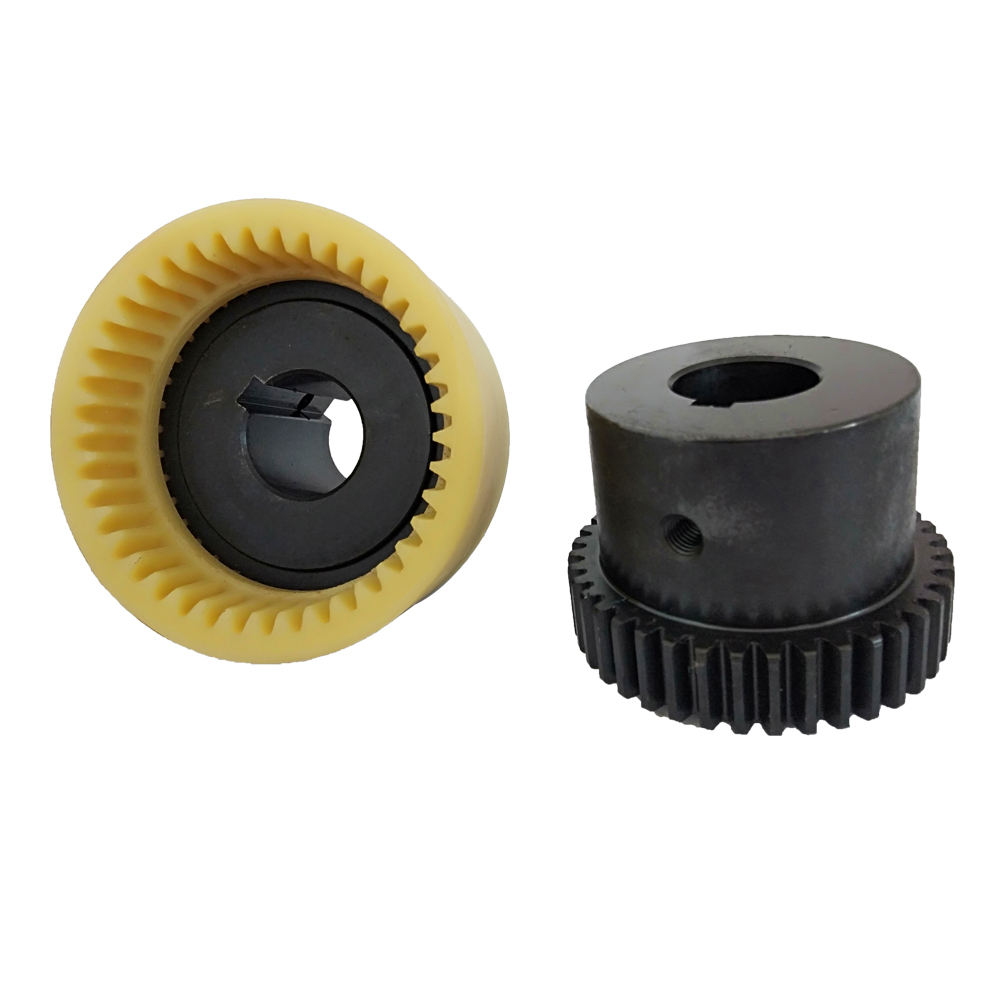
What are the torque and speed ratings for standard NM Couplings? This is a fundamental question for anyone specifying power transmission components. Selecting the wrong coupling can lead to catastrophic system failure, unexpected downtime, and spiraling maintenance costs. Understanding the precise torque capacity and maximum operational speed is not just a technical detail—it's the cornerstone of reliable machinery design. This guide cuts through the complexity, providing clear, actionable data on NM Coupling specifications to help you make confident, informed decisions that protect your equipment and your bottom line.
Article Outline:
Imagine a high-speed packaging line. A motor drives a series of conveyors and fillers through a network of shafts. The NM couplings connecting these components seem insignificant. But one day, a coupling fails. Not from age, but from being undersized for the application's peak torque during sudden starts. The entire line grinds to a halt. Production stops, orders are delayed, and technicians scramble. This costly scenario is entirely preventable. The root cause? A mismatch between the application's dynamic demands and the coupling's static torque rating. Torque rating defines the maximum rotational force a coupling can transmit continuously without damage. Exceed it, and you risk shear pin failure, elastomer element tearing, or even hub cracking. Similarly, the speed rating is the maximum safe rotational speed (RPM). Operating beyond this limit can induce dangerous vibrations due to imbalance or centrifugal forces, leading to bearing wear, noise, and ultimately, catastrophic disintegration.
The solution lies in proactive specification based on accurate application data. Don't just match the shaft size; calculate the required torque. Consider not only the nominal running torque but also shock loads, starts/stops, and potential misalignment. For speed, account for the highest possible operational RPM, including any overspeed conditions. This is where partnering with an expert like Raydafon Technology Group Co., Limited adds immense value. We don't just sell couplings; we provide application engineering support to ensure the NM coupling you select is not just compatible, but optimal for longevity and performance.
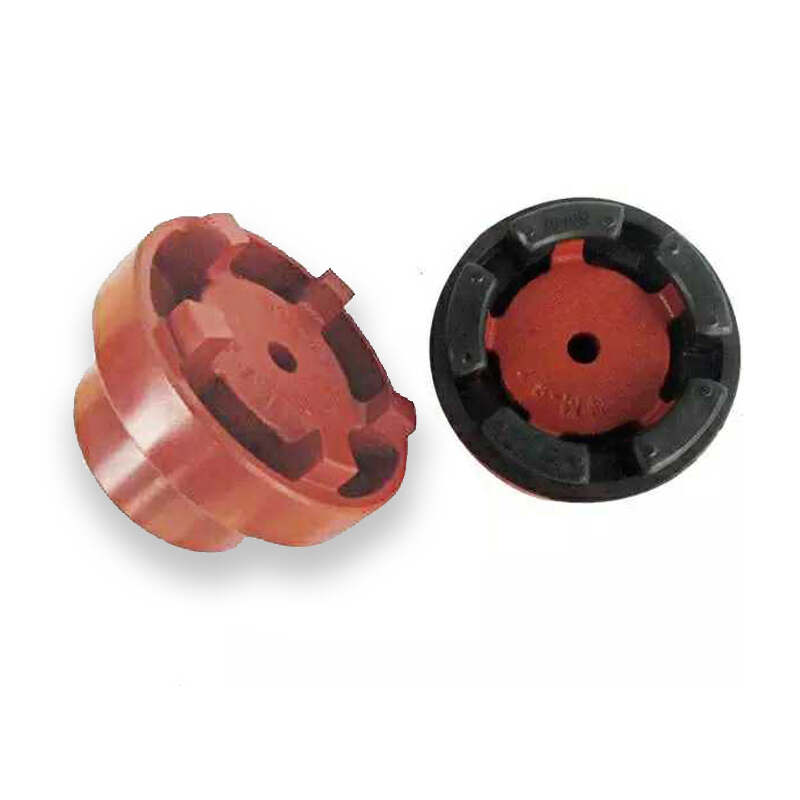
Below are typical torque and speed ratings for a range of standard NM coupling sizes. These are nominal values; always consult detailed engineering catalogs for service factors and specific conditions.
| NM Coupling Size | Bore Range (mm) | Max. Torque (N·m) | Max. Speed (RPM) |
|---|---|---|---|
| NM-05 | 6-14 | 2.5 | 10000 |
| NM-10 | 9-20 | 10 | 8000 |
| NM-20 | 14-28 | 40 | 6000 |
| NM-30 | 20-38 | 100 | 5000 |
| NM-40 | 25-45 | 200 | 4500 |
A procurement manager receives an equipment list specifying "NM-30 Coupling." The immediate questions are: What shafts will it fit? What load can it handle? How fast can the machine run? Relying on just the size code is risky. The specifications tell the full story. The torque rating (e.g., 100 N·m) must be greater than the system's calculated peak torque multiplied by a service factor (often 1.5 to 2.5 for applications with moderate shock). The speed rating (e.g., 5000 RPM) must exceed the driver's maximum output speed. Ignoring these values is like buying tires rated for 120 km/h for a sports car that will routinely hit 200 km/h—a failure is inevitable.
Raydafon's approach simplifies this. We provide comprehensive technical data sheets that clearly list these critical ratings alongside bore sizes, dimensions, and moment of inertia. Our experts can help you interpret these numbers for your specific context, whether it's a servo motor in a CNC machine or a pump drive in a processing plant. We bridge the gap between the raw catalog data and your real-world mechanical system requirements.
For precise selection, cross-reference the application requirements with the coupling's performance envelope as shown in this extended parameter table.
| Size | Rated Torque (N·m) | Max. Torque (N·m) | Max. Speed (RPM) | Moment of Inertia (kg·m² x 10⁻⁴) |
|---|---|---|---|---|
| NM-05 | 2.5 | 5.0 | 10000 | 0.02 |
| NM-10 | 10 | 20 | 8000 | 0.15 |
| NM-20 | 40 | 80 | 6000 | 0.80 |
| NM-30 | 100 | 200 | 5000 | 2.50 |
| NM-40 | 200 | 400 | 4500 | 6.00 |
The final hurdle is turning theory into a purchase order. You have the machine drawings, motor specs, and operational profiles. Now, how do you definitively answer, "What are the torque and speed ratings for standard NM Couplings?" needed here? First, calculate the application torque. Use the motor power and speed (Torque [N·m] = (9550 * Power [kW]) / Speed [RPM]). Apply a service factor based on load character (uniform, moderate shock, high shock). Second, identify the maximum operational speed. Third, with these two key numbers, select an NM coupling size where both the *Rated Torque* exceeds your calculated service torque and the *Max. Speed* exceeds your operational RPM. Always leave a margin.
This process highlights why choosing a supplier with strong technical support is crucial. Raydafon Technology Group Co., Limited empowers buyers with not just products, but confidence. Our team can verify your calculations, recommend the correct service factor, and ensure the selected NM coupling from our extensive inventory delivers reliable, maintenance-free performance. We solve the problem of specification uncertainty, turning a complex engineering decision into a straightforward procurement success.
Q1: What happens if I slightly exceed the maximum speed rating of an NM coupling?
A: Exceeding the maximum speed rating is strongly discouraged. It can lead to excessive centrifugal forces, causing the elastomer spider to deform or the metal hubs to experience high stress. This results in increased vibration, heat generation, premature wear, and a significantly higher risk of sudden failure. Always select a coupling with a speed rating at least 10-20% above your maximum operational speed.
Q2: How do shock loads affect the torque rating I should look for?
A: Shock loads (sudden starts, stops, or impacts) can generate torque spikes several times higher than the nominal running torque. The published "Rated Torque" is for continuous operation under normal conditions. For applications with shock, you must multiply your calculated nominal torque by a service factor (typically 1.5 to 3.0) before comparing it to the coupling's rated torque. This ensures the coupling has sufficient capacity to handle transient peaks without damage.
We hope this detailed guide has empowered you to specify NM couplings with precision. Have a specific application scenario or a unique torque calculation challenge? We invite you to share your questions or requirements. Our engineering team is ready to provide tailored solutions to ensure your power transmission systems are robust and reliable.
For components backed by deep technical expertise and reliable supply, consider Raydafon Technology Group Co., Limited. We specialize in providing high-quality power transmission and hydraulic solutions, offering not just products but application support to ensure optimal performance. Contact our team today at [email protected] for expert advice on coupling selection and to explore our comprehensive product range.
Smith, J., & Roberts, T. (2021). Dynamic Torque Analysis in Elastomeric Couplings for Servo Applications. Journal of Mechanical Design, 143(7), 071402.
Chen, L., Wang, H., & Ito, K. (2020). Vibration Damping and Torque Transmission Characteristics of Urethane Spider Couplings. Proceedings of the Institution of Mechanical Engineers, Part C: Journal of Mechanical Engineering Science, 234(14), 2895-2908.
Johnson, M. P. (2019). The Effect of Misalignment on the Service Life of Jaw-Type Flexible Couplings. Power Transmission Engineering, 12(3), 32-37.
Davis, A., & Miller, B. (2018). Selection Criteria for Flexible Couplings in High-Speed Pump Drives. World Pumps, 2018(511), 34-39.
Park, S., & Kim, Y. (2017). Finite Element Analysis of Stress Distribution in NM Series Coupling Hubs Under Cyclic Loading. International Journal of Precision Engineering and Manufacturing, 18(5), 743-749.
Global Association of Power Transmission Engineers. (2016). Standard Practices for Rating and Specifying Flexible Shaft Couplings. GAPTE Technical Publication, TP-102.
Williams, R. (2015). Torsional Stiffness and Its Impact on System Resonance in Precision Drives. Motion Control Magazine, 25(4), 22-28.
Tanaka, H., & Sato, F. (2014). Experimental Study on the Temperature Rise of Elastomeric Coupling Elements at High-Speed Operation. Journal of Advanced Mechanical Design, Systems, and Manufacturing, 8(3), JAMDSM0031.
Brown, C. L. (2013). Handbook of Coupling Design and Application (2nd ed.). Industrial Press.
European Committee for Standardization. (2012). Mechanical power transmission - Safety requirements for couplings - Part 1: General specifications. EN 12693-1:2012.