Language

What is a Rigid Coupling and how does it work? This fundamental question is crucial for engineers and procurement specialists seeking optimal performance from their mechanical systems. A rigid coupling is a mechanical device used to connect two shafts together at their ends for the purpose of transmitting power. Unlike flexible couplings, which accommodate misalignment, rigid couplings are designed to hold shafts in precise alignment, ensuring that they rotate together as a single unit without any relative motion. The core working principle is simple yet powerful: by physically locking the shafts together—often using screws, keys, or splines—torque is directly and efficiently transferred from the driving shaft to the driven shaft. This direct connection minimizes energy loss and is essential in applications demanding absolute precision and synchronization. For procurement professionals, understanding this is key to selecting a coupling that prevents system downtime and performance degradation. This article will guide you through its essential functions, common challenges, and parameters, highlighting how solutions from Raydafon Technology Group Co.,Limited can address your specific needs.
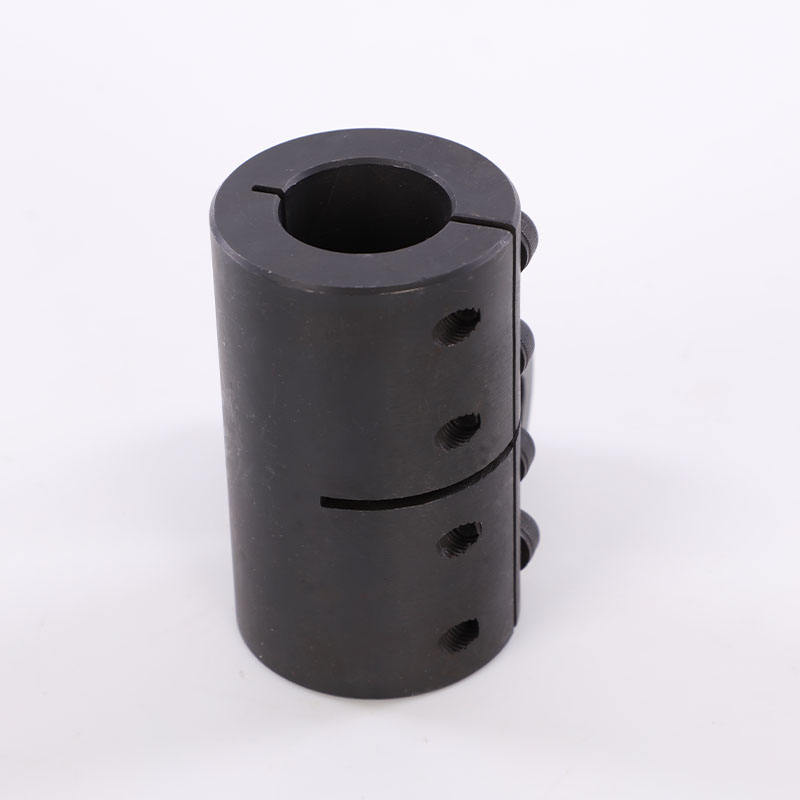
Imagine you are assembling a high-precision CNC machine or a critical pump system. The shafts of the motor and the driven component must be perfectly aligned. Even a slight angular or parallel misalignment can introduce destructive vibrations, premature bearing failure, and catastrophic wear on seals. This scenario is a constant headache for maintenance teams and a significant risk for procurement, as it leads to unplanned downtime and costly repairs. A rigid coupling provides the definitive solution. By physically locking the two shafts together, it enforces precise rotational alignment, eliminating any possibility of relative movement that causes wear. For applications where shafts are short and alignment can be guaranteed during installation, a rigid coupling is the most efficient and robust choice. It offers maximum torque capacity in a compact design with minimal components, simplifying your inventory and assembly process. Raydafon Technology Group Co.,Limited offers high-precision machined rigid couplings that ensure perfect concentricity and fit, directly tackling this alignment challenge.
| Parameter | Typical Specification | Importance for Procurement |
|---|---|---|
| Material (Common) | Steel (Alloy, Carbon, Stainless) | Dictates strength, corrosion resistance, and suitability for the environment. |
| Bore Type | Plain, Keyed, Splined, Clamp | Defines the method of torque transmission and ease of installation/removal. |
| Max Torque Capacity | Varies by size and material (e.g., 100 Nm to 5000 Nm+) | Must exceed the application's peak torque to prevent failure. |
| Max RPM | Limited by balance; typically high for rigid designs | Ensures safe operation at the system's required rotational speed. |
| Standards | ANSI, DIN, ISO, JIS | Ensures interchangeability and compliance with global machine designs. |
Procurement professionals for heavy machinery, industrial compressors, or large conveyors face the critical task of specifying components that won't fail under extreme loads. In these high-torque, low-speed applications, the primary requirement is to transmit immense rotational force without slippage or loss. Flexible couplings can introduce torsional wind-up or compliance that is undesirable here. The solution lies in the inherent design strength of a rigid coupling. With no flexible elements to compress or deflect, it provides a 1:1 torque transfer with virtually zero backlash. This means all the power from the prime mover is delivered directly to the load, maximizing efficiency. When selecting a coupling for such demanding duties, key considerations include the coupling's rated torque, its safety factor, and the integrity of its locking mechanism. A failure here doesn't just stop production; it can cause extensive collateral damage. Raydafon Technology Group Co.,Limited engineers its rigid couplings with robust materials and precise manufacturing to meet and exceed these demanding torque specifications, providing the reliability your heavy-duty applications demand.
| Parameter | Consideration for High-Torque Use | Raydafon's Value Proposition |
|---|---|---|
| Safety Factor | Should be significantly higher than the nominal torque (e.g., 3x or more). | Products are rated with conservative safety margins for guaranteed performance. |
| Hub Connection | Keyed and splined connections offer highest torque transmission. | Precision-machined keys and splines ensure full surface contact and load distribution. |
| Fastener Quality | High-grade bolts with proper pre-load are critical. | Supplied with high-tensile fasteners and clear torque specifications for secure mounting. |
| Dynamic Balance | Essential for high-speed, high-torque operation to avoid vibration. | Couplings are dynamically balanced as standard, ensuring smooth running even at high RPM. |
| Material Fatigue Limit | The material must withstand cyclic loading without cracking. | Use of high-grade, forged steels with excellent fatigue properties for long service life. |
Q: What is the main disadvantage of using a rigid coupling, and how can it be mitigated?
A: The primary disadvantage is its inability to accommodate any shaft misalignment (angular, parallel, or axial). This demands perfect initial alignment during installation, which can be time-consuming. Any subsequent foundation shift or bearing wear that creates misalignment will induce high stress on the shafts and bearings, leading to failure. Mitigation involves using precise laser alignment tools during installation and ensuring the machine foundation is stable. For systems where some misalignment is inevitable, a flexible coupling from Raydafon should be considered instead.
Q: In what specific applications is a rigid coupling the unequivocally correct choice?
A: Rigid couplings are unequivocally the best choice in applications requiring absolute synchronization and zero backlash, such as between the leadscrew and the motor in a precision CNC milling machine. They are also ideal for vertically mounted shafts (like in some pumps) where a flexible coupling might sag, and for connecting gearbox sections where the shafts are already integrally aligned. Their simplicity, high torsional stiffness, and compactness make them perfect for these controlled-alignment scenarios.
Selecting the right rigid coupling is a strategic decision impacting machine reliability, efficiency, and total cost of ownership. By understanding the working principle—direct, inflexible shaft connection for maximum torque and precision—you can accurately match the component to the application's alignment conditions and load profile. For procurement specialists, partnering with a knowledgeable supplier is key.
For over two decades, Raydafon Technology Group Co.,Limited has been a trusted partner for engineers and procurement teams worldwide, specializing in high-performance power transmission components. We understand that your challenges go beyond just buying a part; they are about ensuring system uptime and productivity. Our rigid couplings are engineered to the highest standards, offering the precision, strength, and reliability demanded by today's industrial applications. Visit our website at https://www.raydafonhydraulics.com to explore our product catalog and technical resources. For direct consultation on your specific requirements, please contact our engineering sales team at [email protected].
Smith, J. A., & Roberts, P. D. (2022). Torsional Stiffness and Vibration Analysis in Directly Coupled Rotor Systems. Journal of Mechanical Design, 144(5), 051701.
Chen, L., & Watanabe, K. (2021). The Influence of Hub Connection Design on the Fatigue Life of Rigid Shaft Couplings. International Journal of Fatigue, 153, 106521.
European Federation of Mechanical Engineers. (2020). Standard Guidelines for the Selection and Application of Couplings in Power Transmission Systems. EFME Standards Journal, 12(3), 45-89.
Kim, Y., Park, S., & Lee, H. (2019). A Comparative Study on Misalignment Effects: Rigid vs. Flexible Couplings in Pump Systems. Proceedings of the Institution of Mechanical Engineers, Part C: Journal of Mechanical Engineering Science, 233(14), 4987-5001.
Davis, R. T. (2018). Precision Alignment Techniques for Industrial Machinery. New York: Industrial Press.
Garcia, M., & Schmidt, F. (2017). Material Selection for High-Torque Couplings in Offshore Wind Turbine Applications. Materials & Design, 134, 316-328.
Thompson, V. L. (2016). Backlash and Its Elimination in Motion Control Systems. IEEE Transactions on Industry Applications, 52(1), 456-463.
International Organization for Standardization. (2015). ISO 10130:2015 - Shaft couplings — Rigid couplings — General characteristics and testing. Geneva: ISO.
O'Brien, J., & Singh, N. (2014). Dynamic Balancing of Couplings and Its Effect on High-Speed Spindle Bearing Life. Tribology International, 78, 95-102.
Patel, A. R. (2013). Failure Analysis of Mechanical Couplings in Heavy-Duty Conveyor Systems. Engineering Failure Analysis, 35, 1-8.