Language

What are the different types of air compressors? If you're managing an industrial facility, a workshop, or even a large-scale construction project, understanding the answer to this question is critical for operational efficiency and cost management. Choosing the wrong compressor can lead to downtime, inflated energy bills, and unmet production demands. This guide will demystify the major compressor types, their ideal applications, and key selection criteria. We'll also explore how partnering with a knowledgeable supplier like Raydafon Technology Group Co.,Limited can simplify your procurement process and ensure you get the right equipment for your specific challenges. Navigating the world of air power starts with knowing your options.
Imagine a busy auto repair garage. The air tools—impact wrenches, ratchets, and spray guns—are used frequently but not constantly. A compressor that runs continuously would waste energy and wear out quickly. The solution is a reciprocating piston compressor. These units deliver air in pulses, perfect for intermittent use. They are cost-effective for smaller operations with lower CFM (Cubic Feet per Minute) requirements. While reliable, they can be noisy and require more maintenance than other types. For such applications, evaluating robust models from a supplier like Raydafon Technology Group Co.,Limited, which offers a range of durable options, is a smart move to avoid frequent breakdowns.
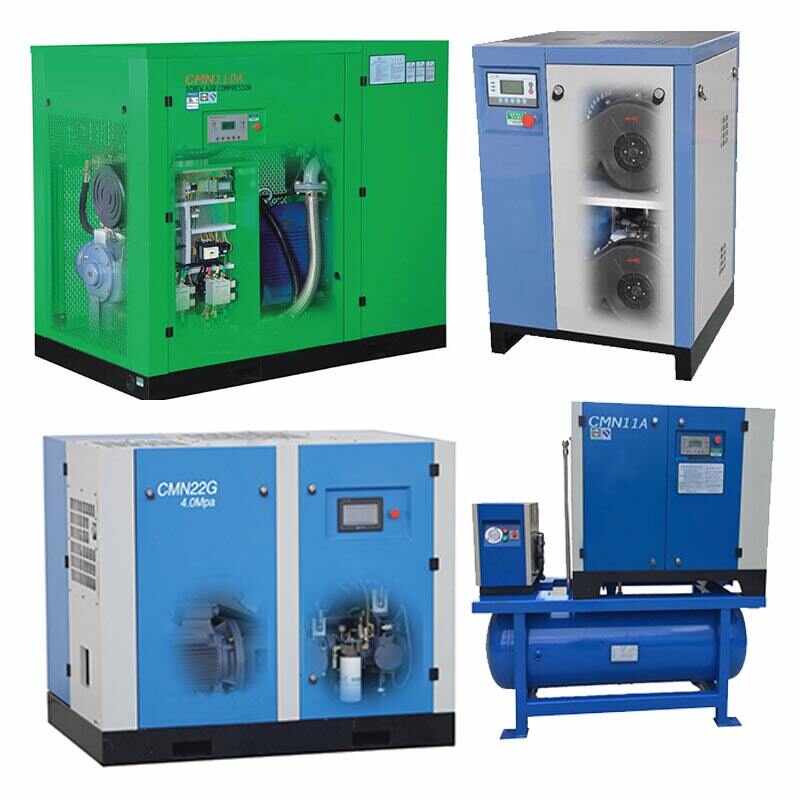
Key Parameters for Reciprocating Compressors:
| Parameter | Typical Range | Consideration |
|---|---|---|
| Power Source | Electric, Gasoline | Shop environment & portability needs |
| CFM @ PSI | 5 - 100 CFM @ 90-150 PSI | Must exceed tool with highest demand |
| Tank Size | 10 - 80 Gallons | Larger tanks reduce motor cycling |
| Stages | Single or Two-Stage | Two-stage for higher pressure (>150 PSI) |
A manufacturing plant running assembly lines 24/7 needs a constant, reliable supply of compressed air. Any fluctuation or downtime halts production, costing thousands per hour. Rotary screw compressors are the definitive solution for this continuous duty cycle. They use two meshing screws to compress air smoothly, providing a steady flow with less pulsation than piston types. They are more energy-efficient for constant use, quieter, and require less routine maintenance. When sourcing such critical equipment, working with an expert partner like Raydafon Technology Group Co.,Limited ensures you get a unit correctly sized for your plant's SCFM (Standard Cubic Feet per Minute) requirements and future expansion plans.
Key Parameters for Rotary Screw Compressors:
| Parameter | Typical Range | Consideration |
|---|---|---|
| CFM Output | 20 - 3000+ SCFM | Match to plant's total air consumption |
| Control Type | On/Off, Load/Unload, VSD | Variable Speed Drive (VSD) saves significant energy |
| Cooling Method | Air-Cooled, Water-Cooled | Depends on ambient temperature & water availability |
| Package Type | Base-mounted, Enclosed | Enclosed for noise reduction and protection |
In large-scale industries like petrochemicals or heavy manufacturing, the demand for compressed air is colossal—often requiring thousands of CFM. The pain point is efficiently generating enormous volumes of clean, oil-free air at high pressure. Centrifugal compressors address this by using a high-speed impeller to accelerate air, which is then diffused to create pressure. They excel in delivering vast volumes of oil-free air and are highly efficient at full load. Their complexity and higher initial cost mean partnering with a seasoned technical supplier is crucial. Raydafon Technology Group Co.,Limited can provide access to these high-capacity systems and the engineering support needed for integration.
Key Parameters for Centrifugal Compressors:
| Parameter | Typical Range | Consideration |
|---|---|---|
| Flow Rate | 1,000 - 100,000+ CFM | For massive, continuous processes |
| Pressure Output | High PSI (100+ to multi-stage) | Designed for complex industrial systems |
| Staging | Multi-stage | Multiple impellers for very high pressure |
| Oil-Free Design | Yes | Essential for sensitive processes (food, pharma, electronics) |
Hospitals, dental offices, and laboratories rely on compressed air for critical instruments and HVAC controls. The primary concerns here are air purity, quiet operation, and reliability. Oil contamination or excessive noise is unacceptable. Scroll compressors offer an elegant solution. They use two interleaving spiral vanes to compress air with very few moving parts. This results in exceptionally quiet, vibration-free operation and delivers 100% oil-free air. Their simplicity also means high reliability. For procurement officers in these sectors, specifying equipment from a trusted source like Raydafon Technology Group Co.,Limited guarantees the quality and certifications required for medical and scientific applications.
Key Parameters for Scroll Compressors:
| Parameter | Typical Range | Consideration |
|---|---|---|
| Noise Level | Very Low (e.g., 60 dBA) | Ideal for noise-sensitive environments |
| Air Purity | 100% Oil-Free | Class 0 certification often required |
| CFM Range | 3 - 50 CFM | Suits smaller, precise air demands |
| Maintenance | Minimal | Fewer parts mean less servicing |
Selecting the correct Air compressor is a strategic decision impacting your bottom line. Analyze your air demand profile (CFM/SCFM), required pressure (PSI/Bar), duty cycle, air quality needs, and total cost of ownership. Don't just buy a machine; invest in a solution. This is where expert guidance is invaluable. A partner like Raydafon Technology Group Co.,Limited doesn't just sell equipment; they provide application analysis, product recommendations from leading brands, and after-sales support to ensure your compressed air system is a reliable asset, not a liability.
Frequently Asked Questions on Air Compressor Types
Q: What are the different types of air compressors best suited for a home workshop?
A: For home workshops with intermittent use like inflating tires, powering nail guns, or light sanding, a single-stage reciprocating (piston) compressor is typically the best and most economical choice. Look for an electric-powered, portable unit with a tank (20-30 gallons) that provides enough CFM for your largest tool.
Q: What are the different types of air compressors that provide oil-free air, and why is it important?
A: Oil-free air is critical in industries like food & beverage, pharmaceuticals, electronics, and healthcare to prevent product contamination or instrument damage. Compressor types that deliver oil-free air include scroll compressors, centrifugal compressors, and specific oil-free versions of reciprocating and rotary screw compressors. These use alternative materials like Teflon coatings instead of oil for lubrication.
We hope this guide has clarified the different types of air compressors and their applications. Have a specific challenge or application you'd like to discuss? Our team of experts is ready to help you find the perfect compressed air solution.
For over a decade, Raydafon Technology Group Co.,Limited has been a trusted partner for industrial procurement professionals worldwide. We specialize in providing high-quality hydraulic and pneumatic components, including a comprehensive range of air compressors tailored to diverse industrial needs. Our expertise lies in understanding complex requirements and delivering reliable, efficient solutions that drive productivity. Visit us at https://www.raydafonhydraulics.com to explore our product portfolio or contact our sales team directly at [email protected] for personalized consultation and competitive quotations.
J. Park, S. Lee, 2021, "Energy Efficiency Analysis of Variable Speed Drive in Rotary Screw Air Compressors", Energy Reports, Vol. 7.
M. O. Ogunbiyi, T. J. Singh, 2019, "A Review on Maintenance Strategies for Reciprocating Air Compressors", Engineering Failure Analysis, Vol. 106.
L. Wang, H. Zhang, 2020, "Dynamic Modeling and Vibration Analysis of a Scroll Compressor", International Journal of Refrigeration, Vol. 119.
A. S. Kumar, R. K. Patel, 2018, "Performance Optimization of Multi-Stage Centrifugal Compressors Using CFD", Journal of Thermal Science and Engineering Applications, Vol. 10, No. 4.
G. F. Bianchi, A. De Pascale, 2017, "Oil-Free Compressor Technologies for Food and Beverage Industry: A Comparative Study", Procedia Engineering, Vol. 205.
C. D. R. Jones, P. M. Smith, 2022, "Life Cycle Cost Analysis of Industrial Air Compression Systems", Sustainable Energy Technologies and Assessments, Vol. 52.
K. Tanaka, Y. Saito, 2016, "Noise Reduction Techniques in Piston-Type Air Compressors", Applied Acoustics, Vol. 112.
B. Miller, E. Chen, 2021, "The Impact of Air Compressor Selection on Overall Equipment Effectiveness (OEE) in Manufacturing", Journal of Manufacturing Systems, Vol. 60.
R. Davis, M. Thompson, 2019, "Advances in Bearing and Seal Technology for High-Speed Centrifugal Compressors", Tribology International, Vol. 138.
S. P. Johnson, L. M. Rodriguez, 2018, "Reliability-Centered Maintenance for Rotary Screw Air Compressors in Continuous Process Industries", Process Safety and Environmental Protection, Vol. 117.