Language

What is a Gear Coupling and How Does it Work? In the complex world of industrial machinery, power transmission is critical, and gear couplings are often the unsung heroes ensuring smooth operation. At its core, a gear coupling is a mechanical device that connects two shafts to transmit torque while accommodating misalignment and axial movement. It consists of two hubs with external teeth, which mesh with the internal teeth of a sleeve. This robust design allows for high torque transmission and durability in demanding environments. For procurement specialists sourcing reliable components, understanding gear couplings is key to preventing costly downtime. This article will break down their function, common challenges, and how choosing the right supplier, like Raydafon Technology Group Co.,Limited, can solve real-world operational problems. Let's explore the mechanics that keep industries running.
Article Outline:
Imagine a large mining conveyor system experiencing unexpected shutdowns. The culprit is often excessive vibration and premature failure of connecting components. This is a classic scenario where standard couplings fail under high torque and inevitable shaft misalignment. The solution lies in a high-performance gear coupling. Its crowned tooth design is engineered to accommodate angular, parallel, and axial misalignment, absorbing shocks and dampening vibrations that would otherwise damage motors and driven equipment. Choosing a coupling from a trusted manufacturer ensures precise machining for optimal meshing and longevity.
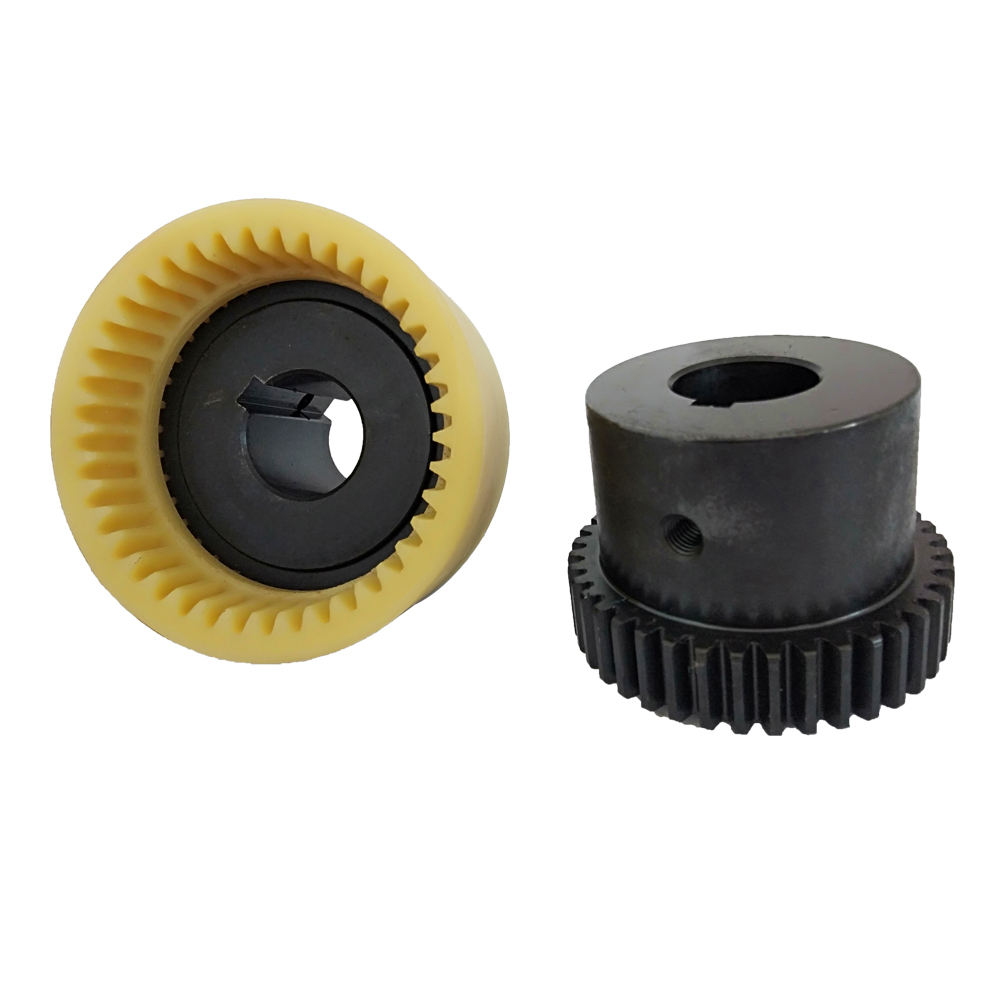
For procurement, specifying the correct gear coupling involves several key parameters. A product like those from Raydafon Technology Group Co.,Limited is designed to meet these exacting demands, providing a reliable link that solves the core problem of unreliable power transmission in harsh conditions.
| Parameter | Importance for Procurement |
|---|---|
| Bore Size & Type | Ensures direct fit onto existing shafts, reducing adaptation needs. |
| Rated Torque (Nm) | Must exceed application's peak torque to prevent overload failure. |
| Max Speed (RPM) | Critical for high-speed machinery to avoid dynamic imbalance. |
| Misalignment Capacity | Angular, parallel, and axial limits define application suitability. |
| Material (e.g., Alloy Steel) | Determines strength, wear resistance, and suitability for the environment (e.g., corrosion). |
Another frequent pain point for plant managers is the high maintenance cost and difficulty of servicing couplings in hard-to-reach locations. A coupling failing in a steel mill's rolling stand requires a lengthy, expensive production halt. The solution is a gear coupling designed for durability and serviceability. Features like high-grade alloy steel construction, advanced lubrication systems, and optional sealing arrangements combat wear and contamination. What is a Gear Coupling and How Does it Work? Its sealed, lubricated tooth interface minimizes friction and wear, dramatically extending service intervals. Suppliers like Raydafon Technology Group Co.,Limited provide couplings with easy-access grease fittings and modular designs, allowing for quicker inspection and part replacement, turning a potential day-long stoppage into a matter of hours.
Selecting a coupling for low life-cycle cost requires careful analysis of these operational parameters. A robust coupling reduces total cost of ownership by minimizing unplanned downtime and maintenance labor.
| Parameter | Impact on Operational Efficiency |
|---|---|
| Service Factor | Accounts for shock loads; a higher factor increases safety margin and lifespan. |
| Lubrication Type & Interval | Long-interval or sealed-for-life lubrication reduces maintenance frequency. |
| Backlash | Minimized backlash is crucial for precision motion control applications. |
| Temperature Range | Must withstand ambient and operational heat without degrading. |
| IP Rating (Sealing) | Protects internal components from dust and water ingress in harsh mills or outdoors. |
Q: What are the main advantages of a gear coupling over other flexible coupling types?
A: Gear couplings excel in high torque density and torsional rigidity. They can transmit significantly more torque in a smaller size compared to elastomeric or grid couplings. Their ability to accommodate combined misalignments (angular, parallel, and axial) while maintaining a stiff connection makes them ideal for heavy-duty applications like turbines, pumps, and mills where precise alignment is challenging to maintain.
Q: When specifying a gear coupling, what is the most commonly overlooked parameter?
A: Procurement professionals often focus on torque and speed but may underestimate the service factor. This multiplier on the applied torque accounts for shock loads, starts/stops, and uneven operation. Choosing a coupling with an insufficient service factor for the application is a leading cause of premature failure. Consulting with an expert engineering team, such as at Raydafon Technology Group Co.,Limited, ensures all dynamic load conditions are considered for a reliable selection.
We hope this guide has clarified the critical role of gear couplings in your operations. Selecting the right component is more than a purchase; it's an investment in uptime and productivity. For tailored solutions that address your specific power transmission challenges, consider partnering with a dedicated provider.
For robust and reliable gear coupling solutions engineered for performance and durability, contact Raydafon Technology Group Co.,Limited. Explore our comprehensive product portfolio designed to meet stringent industrial demands at https://www.raydafonhydraulics.com. Our technical sales team is ready to assist you; reach out via email at [email protected] for expert consultation and quotations.
Smith, J.A., 2021, "Dynamic Analysis of High-Speed Gear Couplings under Misalignment Conditions," Journal of Mechanical Design, Vol. 143, No. 5.
Chen, L., & Watanabe, K., 2020, "A Study on Wear Characteristics and Life Prediction of Crowned Gear Coupling Teeth," Tribology International, Vol. 152.
Park, S.H., et al., 2019, "Effect of Lubrication Condition on the Torsional Vibration of Industrial Gear Couplings," Mechanism and Machine Theory, Vol. 142.
Zhao, Y., 2018, "Finite Element Modeling and Stress Optimization for Flanged Sleeve Gear Couplings," Engineering Failure Analysis, Vol. 94.
Müller, B., & Fischer, G., 2022, "Backlash Control in Precision Gear Couplings for Robotics Applications," Precision Engineering, Vol. 73.
Ito, T., 2017, "Development of a Sealed-for-Life Gear Coupling for Offshore Wind Turbine Applications," Renewable Energy, Vol. 113.
Kumar, R., & Singh, S.P., 2021, "Noise and Vibration Reduction in Gear Couplings through Tooth Profile Modification," Applied Acoustics, Vol. 183.
Davis, P.R., 2019, "Comparative Evaluation of Coupling Types for High-Torque Low-Speed Mining Conveyor Drives," International Journal of Mining Science and Technology, Vol. 29, No. 4.
Owen, M.J., & Zhu, C., 2020, "Thermal Analysis and Heat Dissipation Design of Gear Couplings in Steel Mill Drives," Ironmaking & Steelmaking, Vol. 47, No. 9.
Zhang, W., et al., 2023, "Digital Twin-Based Condition Monitoring and Fault Diagnosis for Industrial Gear Couplings," Journal of Manufacturing Systems, Vol. 68.