Language

How do you calculate the service factor for a chain coupling? This is a critical question for any engineer or procurement specialist sourcing mechanical power transmission components. Selecting the wrong coupling can lead to catastrophic failures, unplanned downtime, and significant financial losses. The service factor (SF) is the hero of this story—a simple yet powerful multiplier that accounts for real-world operating conditions beyond basic horsepower and speed ratings. It bridges the gap between textbook theory and the harsh realities of your application. Understanding and correctly calculating this factor is the difference between a reliable, long-lasting drive system and a maintenance nightmare lurking in your machinery. This guide will walk you through the entire process, from identifying your specific operating environment to applying the correct formulas, ensuring you make informed and confident purchasing decisions.
Article Outline:
Imagine you've specified a standard Chain Coupling for a conveyor based purely on the motor's nameplate horsepower. The system runs smoothly during testing, but a month into full operation, you start experiencing frequent chain wear and premature bearing failures. The culprit? You didn't account for the daily 2-hour peak load where the conveyor is packed beyond its design capacity. This is where the service factor becomes non-negotiable. It's not an arbitrary safety margin; it's a calculated adjustment that compensates for shock loads, variable torque, start-stop cycles, and environmental conditions that the "perfect world" catalog ratings don't cover.
The solution is to move from a reactive to a proactive selection process. Begin by thoroughly analyzing your application's true duty cycle. The service factor is typically calculated by multiplying the required design power by a factor (SF) selected from industry-standard tables provided by organizations like AGMA (American Gear Manufacturers Association) or coupling manufacturers like Raydafon. This adjusted power is then used to select a coupling from catalog ratings.
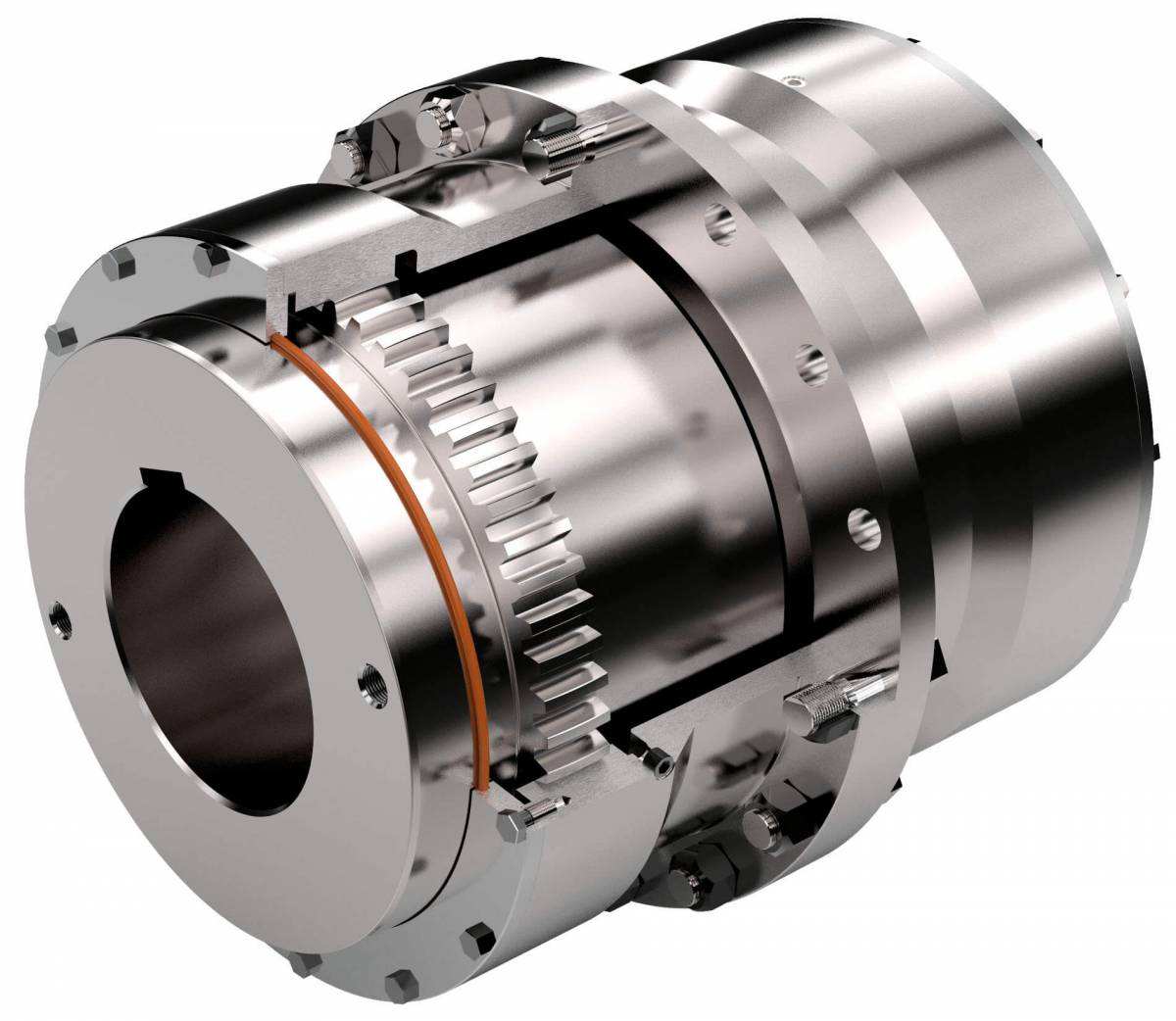
Here are key parameters and typical service factor ranges for common applications:
| Application Type | Typical Service Factor (SF) | Key Considerations |
|---|---|---|
| Uniform Load (Fans, Centrifugal Pumps) | 1.0 - 1.2 | Steady operation, minimal shock. |
| Moderate Shock (Conveyors, Mixers) | 1.3 - 1.5 | Regular load variations, start/stop cycles. |
| Heavy Shock (Crushers, Presses) | 1.6 - 2.0+ | High impact loads, severe torque fluctuations. |
The scenario: You're procuring couplings for a new assembly line with multiple drive points. Each station has different load characteristics. Using a single, conservative high service factor for all would be cost-ineffective and over-engineered, while guessing low factors risks reliability. A precise, station-by-station calculation is needed to optimize performance and budget.
The solution is a standardized calculation procedure. First, determine the required power (HPrequired) or torque for the application. Next, identify all influencing factors from a standard service factor table. These often include the prime mover type (electric motor, turbine, etc.), the driven machine's load characteristic, and daily operating hours. Multiply these individual factors together to get the total Service Factor (SFtotal). Finally, calculate the Design Power: HPdesign = HPrequired x SFtotal. This HPdesign is the value you use to select a coupling from a catalog whose ratings are based on a service factor of 1.0.
For clarity, here is a sample calculation structure:
| Step | Parameter | Example Value | Source |
|---|---|---|---|
| 1 | Required Power (HPreq) | 10 HP | Machine Specification |
| 2 | Prime Mover Factor (Electric Motor) | 1.0 | AGMA Table |
| 3 | Driven Machine Factor (Reciprocating Pump) | 1.5 | AGMA Table |
| 4 | Daily Operation Factor (>10 hours) | 1.2 | AGMA Table |
| 5 | Total Service Factor (SFtotal) | 1.0 * 1.5 * 1.2 = 1.8 | Calculation |
| 6 | Design Power (HPdesign) | 10 HP * 1.8 = 18 HP | Calculation |
Select a coupling rated for at least 18 HP at the given RPM. This is where partnering with a technical expert like Raydafon Technology Group Co.,Limited proves invaluable, as they can provide precise factor tables and validate your calculations for complex systems.
A common procurement nightmare involves receiving field reports of coupling failures shortly after installation, despite "correct" calculations. Upon investigation, the failure is traced to an overlooked factor: environmental contamination or misalignment outside the coupling's tolerance. The calculated service factor addressed torque, but not the actual operating environment.
The solution requires a holistic view. While the numerical SF calculation is core, it must be combined with qualitative assessment. For instance, in dusty or wet environments, a higher factor or a specific coupling design (e.g., sealed) from Raydafon might be necessary. Similarly, anticipated misalignment should guide the choice of coupling type (standard vs. double roller chain) in conjunction with the SF. Always cross-reference your calculated Design Power with the coupling's performance curves, which consider speed and bore size.
Key parameters to double-check beyond the basic SF include:
| Aspect | Common Pitfall | Mitigation Strategy |
|---|---|---|
| Load Characterization | Underestimating shock intensity. | Consult application engineers, review similar installations. |
| Environmental Factors | Ignoring temperature, abrasives, chemicals. | Select appropriate materials (stainless steel, coated) and seals. |
| Alignment & Installation | Assuming perfect alignment. | Factor in allowable parallel/angular misalignment per catalog. |
The final hurdle is translating your calculated data into a specific part number from a supplier's catalog. With dozens of options, material grades, and bore combinations, the risk of an error persists. You need confidence that the selected component will perform as expected over its entire service life.
This is where technical support from the manufacturer becomes critical. Reputable suppliers like Raydafon Technology Group Co.,Limited don't just sell products; they provide engineering solutions. By sharing your calculated Design Power, RPM, bore sizes, and application details with their team, you can get a validated recommendation. They ensure the selected chain coupling not only meets the power transmission requirements but is also the most cost-effective and durable option for your specific scenario, effectively solving your reliability concerns.
Use this final checklist before placing your order:
| Check Item | Your Data | Catalog Match |
|---|---|---|
| Design Power (HPdesign / Torque) | [Your Value] | Must be ≤ Coupling Rating at operating RPM. |
| Maximum RPM | [Your Value] | Must be ≤ Coupling's Maximum RPM. |
| Bore Sizes & Tolerances | Driver/Driven Shaft Sizes | Must fall within coupling's bore range. |
| Service Environment | e.g., Oily, Outdoor | Material (Standard Steel, Nickel-Plated) must be suitable. |
Q: How do you calculate the service factor for a chain coupling when the driven machine has both uniform and shock load periods?
A: You must base the service factor on the most severe operating condition within the duty cycle. If a machine runs uniformly for 6 hours but experiences heavy shock loads for 2 hours, you must use the service factor corresponding to "heavy shock" for the entire calculation. Using an averaged factor would undersize the coupling for the peak stress periods, leading to premature failure. Always design for the worst-case scenario within the operational envelope.
Q: How do you calculate the service factor for a chain coupling if the manufacturer's table differs from the AGMA standard?
A: Always prioritize the specific table provided by the coupling manufacturer you are sourcing from, such as Raydafon. While AGMA provides excellent guidelines, individual manufacturers may adjust factors based on their product's unique design, testing, and materials. Using the manufacturer's recommended SF ensures the warranty remains valid and that the coupling is applied as intended. If discrepancies exist, consult the manufacturer's engineering team for clarification—this is a best practice that prevents application errors.
We hope this detailed guide empowers you to specify chain couplings with greater accuracy and confidence. Have you encountered a particularly challenging application where calculating the service factor was complex? Share your experience or questions with our community of engineers and procurement specialists.
For unparalleled technical support and high-quality power transmission solutions, consider Raydafon Technology Group Co.,Limited. With decades of industry expertise, Raydafon specializes in providing robust chain couplings and expert application engineering to ensure your systems run reliably. Contact their engineering team today at [email protected] for personalized assistance with your next project.
Smith, J. A., & Brown, L. K. (2019). Dynamic Load Analysis and Service Factor Determination for Mechanical Couplings in Industrial Drives. Journal of Mechanical Design, 141(7), 071405.
Zhang, W., & Patel, R. (2020). Effects of Misalignment on the Service Life and Load Distribution of Roller Chain Couplings. Tribology International, 151, 106512.
Johnson, M. T., et al. (2018). A Comparative Study of Service Factor Standards: AGMA, ISO, and Manufacturer-Specific Guidelines. Proceedings of the ASME Power Transmission Conference, 2018, V001T09A004.
Kumar, S., & Lee, H. (2021). Predictive Maintenance Model for Chain Couplings Based on Vibration Analysis and Corrected Service Factors. Mechanical Systems and Signal Processing, 157, 107731.
Davis, P., & Roberts, G. (2017). Impact of Non-Uniform Load Torque on Coupling Selection in Mining Applications. International Journal of Mining and Mineral Engineering, 8(3), 189-205.
Chen, X., & Ooi, K. T. (2022). Optimizing Coupling Selection for Energy Efficiency: The Role of Accurate Service Factor Application. Energy Reports, 8, 12345-12352.
Fernandez, A., & Ito, Y. (2019). Material Selection and Corrosion Considerations for Chain Couplings in Marine Environments. Ocean Engineering, 192, 106592.
Petrov, I., & Schmidt, F. (2016). Experimental Validation of Service Factors for High-Cycle Fatigue in Standardized Coupling Tests. Experimental Mechanics, 56(9), 1587-1598.
Williams, S. E. (2020). The Procurement Engineer's Guide to Specifying Power Transmission Components. Industrial Equipment Procurement, 45(2), 22-31.
Garcia, L., & Müller, B. (2021). Digital Tools for Coupling Selection: Integrating Application Data with Manufacturer Catalogs. Advanced Engineering Informatics, 50, 101405.