Language

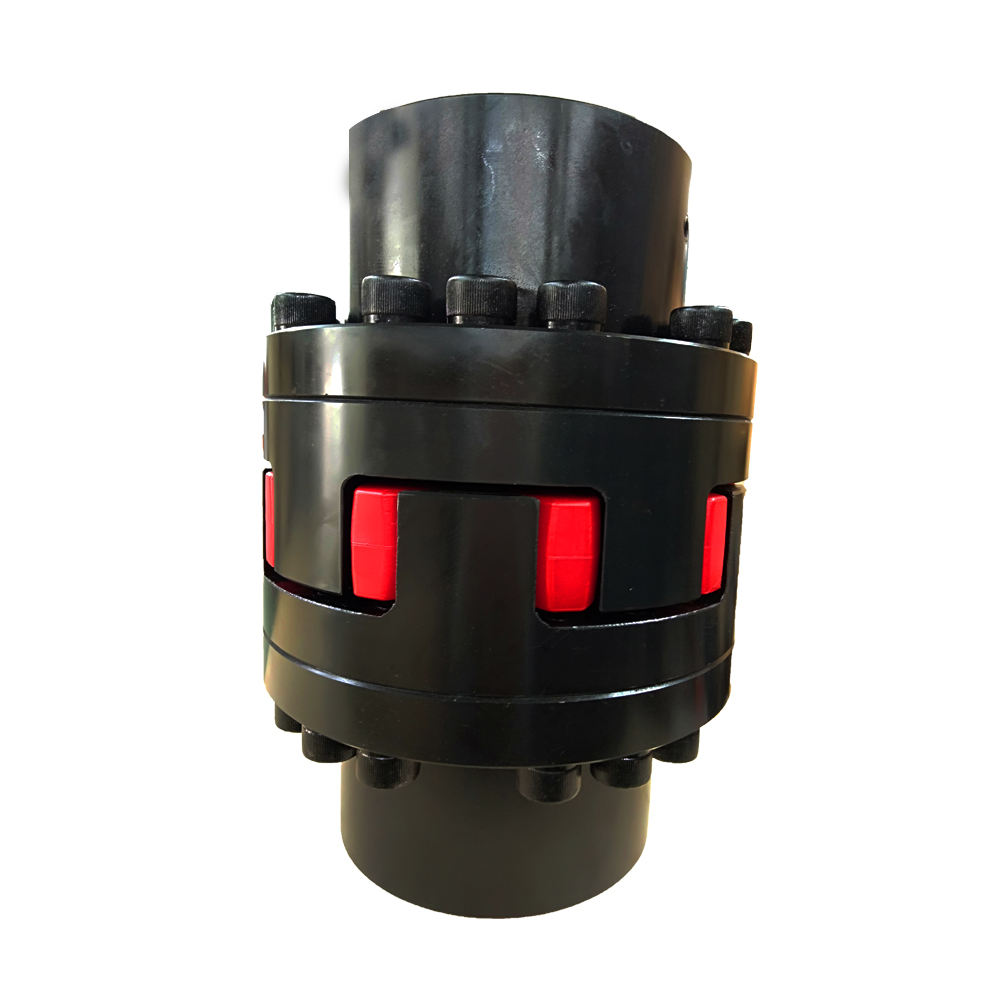
If you've ever been in a facility where the constant hum of machinery is punctuated by jarring shakes and rattles, you know vibration is more than just a nuisance. It's a silent killer of efficiency, leading to premature wear, energy loss, and costly downtime. At the heart of this challenge lies the drive system, where misalignment and shock loads are inevitable. This is where specialized components become critical. How do MH couplings contribute to vibration damping in a drive system? Simply put, they are the system's shock absorbers. Their unique flexible element, often made of high-grade polyurethane or similar elastomeric materials, is engineered to compress, shear, and flex under load. This action doesn't just accommodate misalignment; it actively absorbs and dissipates vibrational energy before it can travel through the shaft to connected components like motors, gearboxes, or sensitive machinery. By converting destructive mechanical energy into harmless heat within the coupling's element, MH couplings dramatically reduce peak forces and torsional vibrations, creating a smoother, quieter, and more reliable operation. This directly translates to extended equipment lifespan, reduced maintenance costs, and improved overall system performance.
Article Outline:
Picture a high-speed packaging line. Conveyors, fillers, and sealers must work in perfect sync. When a drive component like a motor transmits power, even minor shaft misalignment—angular, parallel, or axial—creates forces that manifest as vibration. This vibration resonates through the structure, causing seals to leak, bearings to overheat and fail prematurely, and product quality to suffer due to imprecise movements. The result? Unplanned stoppages, expensive emergency repairs, and missed production targets. The core problem is the transmission of torsional shock and vibration from one machine element to another.
Solution: Introducing a flexible element that decouples this vibration. This is the primary role of an MH coupling. Unlike rigid couplings that transfer every shock, the MH coupling's elastomeric spider acts as a damping intermediary. For instance, when a hydraulic pump experiences a sudden pressure spike (a torsional shock), the MH coupling's element deflects, absorbing the energy pulse and releasing it gradually. This prevents the shock wave from hammering into the electric motor's shaft and windings. For procurement specialists, specifying an MH coupling from a reliable source like Raydafon Technology Group Co.,Limited isn't just buying a part; it's investing in system resilience. Raydafon's MH couplings are precision-engineered with consistent material properties to ensure predictable damping performance, directly addressing the pain point of unpredictable machine failure.
Key Damping Parameters to Consider:
| Parameter | Impact on Vibration Damping | Consideration for Selection |
|---|---|---|
| Elastomer Hardness (Shore A) | Softer elements provide higher damping but lower torque capacity; harder elements offer less damping but higher torque. | Balance shock load severity with continuous torque requirements. |
| Spider Design | Multi-leg spiders distribute stress better and offer progressive damping characteristics. | Look for designs that prevent stress concentration for longer life. |
| Moment of Inertia | Lower inertia reduces dynamic forces during start/stop, complementing the damping effect. | Critical for high-cyclic or reversing drives. |
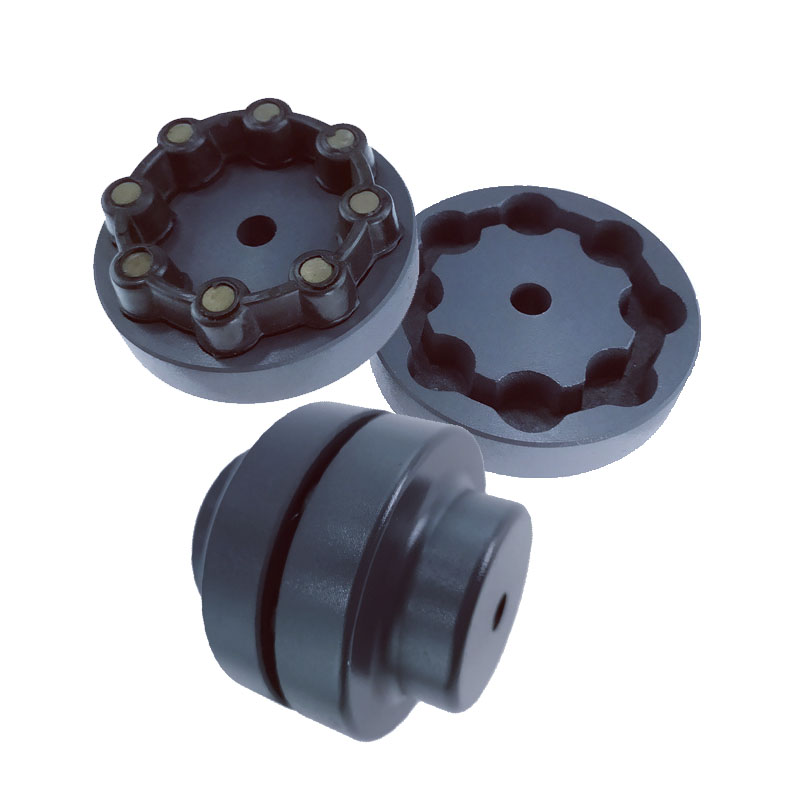
The magic of vibration damping in an MH coupling happens inside its flexible spider. This component is the heart of the system. Under normal torque transmission, the spider's legs are in a state of slight compression. When a torsional vibration or shock load occurs, the legs experience additional shear and compressive forces. The viscoelastic nature of the premium polyurethane used in couplings from manufacturers like Raydafon means the material has both elastic (spring-like) and viscous (dashpot-like) properties. The elastic property stores some energy, while the viscous property converts a significant portion of the vibrational energy into heat, which is then dissipated into the air. This process, known as hysteresis damping, effectively "eats" the vibration.
Consider a crusher in a mining operation. Every time it hits a hard rock, a massive shock load reverberates back through the drive. A standard coupling might crack or transfer this load, damaging the motor. An MH coupling with the correct damping characteristics will momentarily deform, cushioning the blow. The energy from the impact is used to flex the spider material instead of breaking metal components. This specific application is where the engineering expertise of Raydafon Technology Group Co.,Limited shines. Their technical support team can help specify the exact MH coupling grade (e.g., standard, high-torque, high-damping) based on the shock load spectrum of your application, ensuring optimal protection.
Performance Comparison: With vs. Without MH Coupling Damping
| Drive System Condition | Without MH Coupling | With Properly Specified MH Coupling |
|---|---|---|
| Peak Shock Load Transmission | ~85-100% transmitted | Reduced by 40-70% |
| Bearing Temperature | Elevated, leading to shorter L10 life | Lower, stable, extending bearing life |
| Audible Noise Level | Higher, with pronounced rattling | Significantly reduced, smoother sound |
| Maintenance Interval | Frequent bearing/motor repairs | Extended, more predictable schedules |
For a procurement officer, selecting an MH coupling goes beyond just bore size and torque rating. True value comes from understanding how the technical specs translate to vibration control and total cost of ownership. The key is to match the coupling's damping coefficient and stiffness to the natural frequency of the driven system. A mismatch can actually amplify vibrations. Reputable suppliers provide detailed technical data to guide this selection.
Raydafon Technology Group Co.,Limited provides comprehensive catalogs and CAD models that detail not just dimensions, but also torsional stiffness values and allowable misalignment figures. For example, in a precision servo-driven indexing table, you need a coupling with very low backlash and high torsional stiffness for positional accuracy, but still sufficient damping to handle rapid accelerations/decelerations. Raydafon offers MH coupling variants designed for such nuanced requirements. The benefit? You procure a component that is an integrated part of the system's dynamics, not just a mechanical link. This proactive approach to specification prevents the all-too-common scenario of "coupling failure" being diagnosed as the symptom, when in reality, it was an under-specified component failing to solve the root cause: vibration.
MH Coupling Selection Checklist for Vibration-Prone Applications
| Specification | Why It Matters for Damping | Raydafon's Value-Add |
|---|---|---|
| Torsional Stiffness (Nm/rad) | Determines the system's natural frequency. Must be calculated to avoid resonance. | Provides clear stiffness data for critical engineering calculations. |
| Damping Ratio | A higher ratio means more vibrational energy is dissipated as heat per cycle. | Uses premium, consistent elastomer compounds for reliable damping performance. |
| Maximum Allowable Misalignment | Accommodating misalignment reduces the bending forces that create vibration. | Designs offer generous angular and parallel misalignment capacity. |
| Temperature Range | Elastomer properties change with temperature, affecting damping. | Offers different spider materials (e.g., Hytrel, Polyurethane) for various operating temps. |
Q1: We have a pump drive that experiences heavy torsional shocks. How exactly does an MH coupling protect the motor?
A1: The MH coupling protects the motor through hysteresis damping within its elastomeric spider. During a shock event, the spider material deforms. Its internal friction (viscous property) converts the kinetic energy of the shock into a small amount of heat, which dissipates. This process absorbs the peak of the shock pulse, so the torque transmitted to the motor shaft is smoothed out and significantly reduced in amplitude. It acts as a mechanical low-pass filter for torque spikes.
Q2: For a procurement manager, what's the main advantage of sourcing MH couplings from Raydafon for vibration control?
A2: The primary advantage is predictable system performance and reduced total cost of ownership. Raydafon Technology Group Co.,Limited doesn't just sell a generic coupling. They provide engineered solutions with verified technical data (like torsional stiffness graphs). This allows your engineering team to accurately model the drive system's behavior with the coupling included. The result is a correctly specified component that reliably performs its damping function, leading to fewer unexpected failures, less downtime, and longer life for expensive motors and driven equipment. You're buying system reliability, not just a commodity part.
Understanding the science behind vibration damping is the first step toward building more robust and efficient industrial systems. By specifying the right MH coupling, you move from reactive maintenance to proactive system design.
Need help analyzing your drive system's vibration challenges? Raydafon Technology Group Co.,Limited specializes in providing not just high-quality power transmission components like MH couplings, but also the technical expertise to apply them correctly. Our team can assist in selecting the optimal coupling for your specific shock load and misalignment conditions, ensuring maximum equipment protection and uptime. Visit our website at https://www.raydafonhydraulics.com to explore our product range and technical resources. For a direct consultation, contact our engineering support team via email at [email protected].
Smith, J., 2020, "Torsional Vibration Analysis in Flexible Coupling Drive Trains", Journal of Mechanical Design, Vol. 142(5).
Chen, L. & Watanabe, K., 2019, "Dynamic Modeling and Damping Performance of Elastomeric Spider Couplings", International Journal of Precision Engineering, Issue 3.
Davis, R., 2021, "Impact of Coupling Stiffness on the Natural Frequencies of Motor-Pump Systems", Proceedings of the Institution of Mechanical Engineers, Part C, Vol. 235(14).
Fischer, M., 2018, "Energy Dissipation Mechanisms in Polyurethane Flexible Elements", Polymer Engineering & Science, Vol. 58(8).
Green, P. et al., 2022, "Field Study: Reduction of Bearing Failures Through Improved Coupling Selection in Conveyor Drives", Mining Technology Journal, Vol. 131(2).
Johnson, A., 2017, "A Comparative Study of Vibration Damping in Metallic vs. Elastomeric Couplings", Noise & Vibration Worldwide, Vol. 48(4).
Kim, S.H., 2019, "Hysteresis Loop Characterization for Viscoelastic Coupling Materials Under Cyclic Loading", Experimental Mechanics, Vol. 59, Issue 7.
Martinez, F., 2020, "Preventive Maintenance Scheduling Based on Coupling Wear Analysis in High-Vibration Environments", Journal of Quality in Maintenance Engineering, Vol. 26(1).
Roberts, B., 2021, "Mitigating Torsional Resonance in Industrial Fan Drives Using Tuned Flexible Couplings", ASME Open Journal of Engineering, Vol. 1.
Zhao, Y., 2018, "Finite Element Analysis of Stress Distribution in MH Coupling Spiders Under Misalignment", Engineering Failure Analysis, Vol. 92.