Chinese Manufacturer Various Type Lower Impact Self-aligning Idler for Belt Conveyor Extended Service Life with Low Cost
Key FeaturesLow-impact self-aligning idlers, also called low-impact training idlers or low-auto belt aligning idlers, are a special type of return idler used in conveyor belt systems. It performs a dual function:Absorbing shock: Protects the conveyor belt from damage when material falls onto the ret......
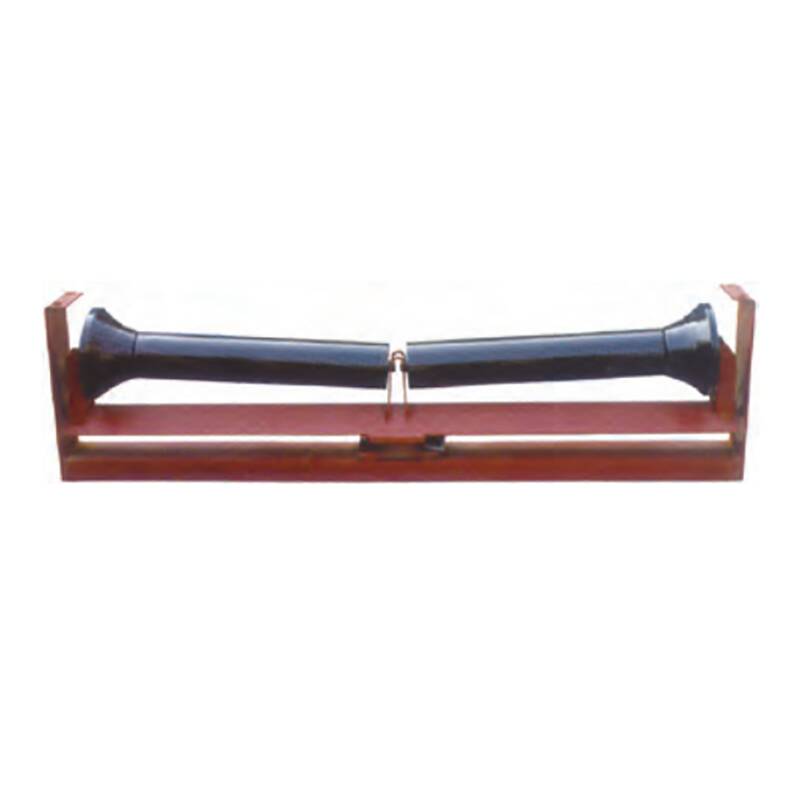
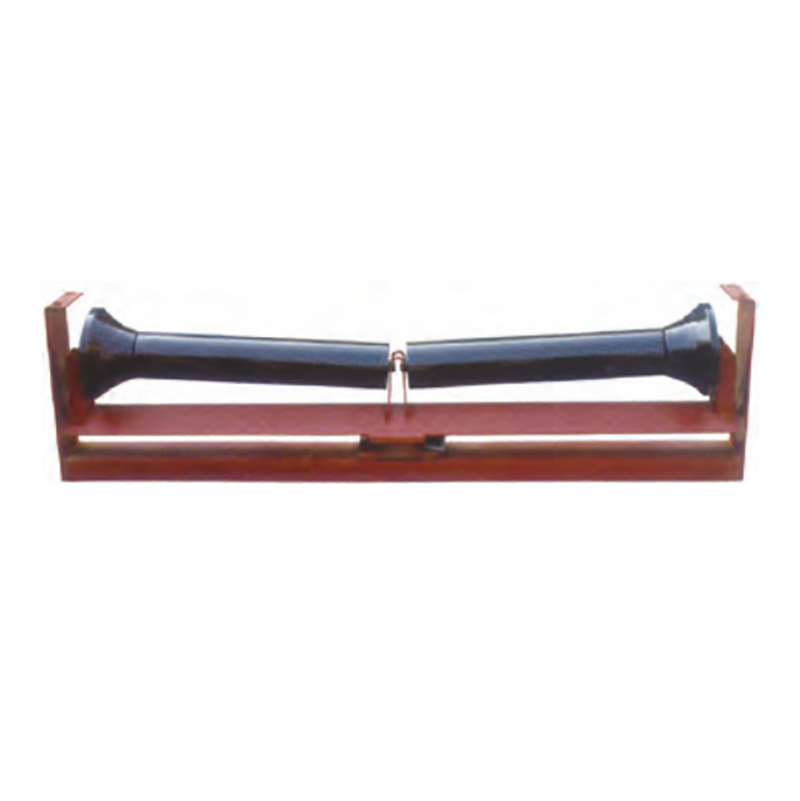
Low-impact self-aligning idlers, also called low-impact training idlers or low-auto belt aligning idlers, are a special type of return idler used in conveyor belt systems. It performs a dual function:
Absorbing shock: Protects the conveyor belt from damage when material falls onto the return side of the conveyor belt. This can happen if material adheres to the conveyor belt on the load side and then falls or spills on the return side.
Self-aligning: Automatically corrects any misalignment (sideways drift) of the return conveyor belt and guides it back to the center of the conveyor belt frame.
The combination of these features makes it particularly useful in areas where the return conveyor belt may encounter falling debris or where it is critical for the life of the system that the conveyor belt always stays aligned.
Features
Low-impact self-aligning idlers are specially designed to perform their dual functions:
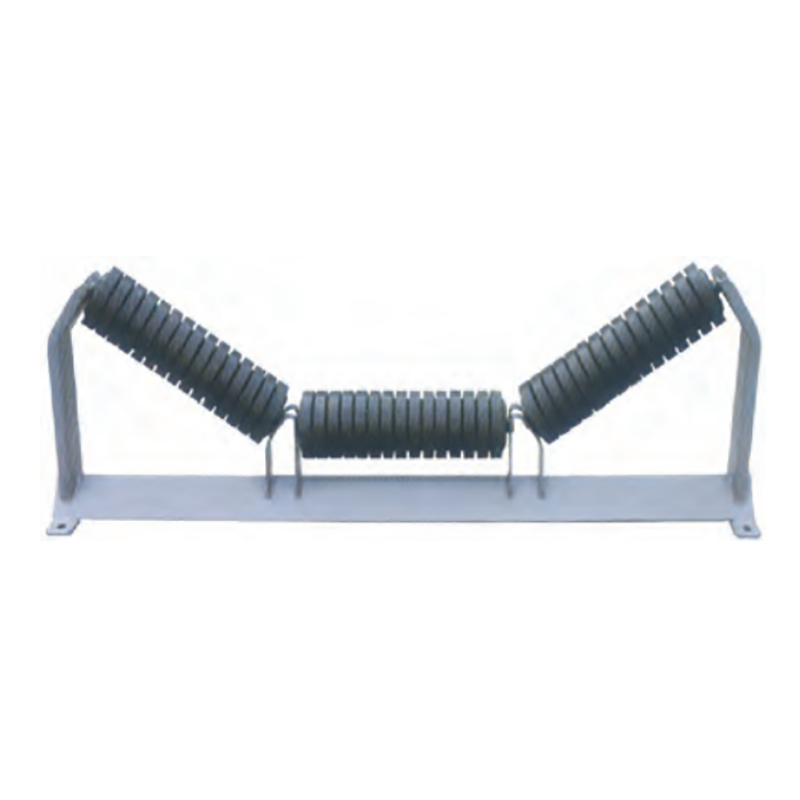
Rubber rings or discs: The idler is equipped with a series of resilient rubber rings or discs along its length. These devices absorb the impact of falling material, protecting the belt frame and the idler itself from impact damage.
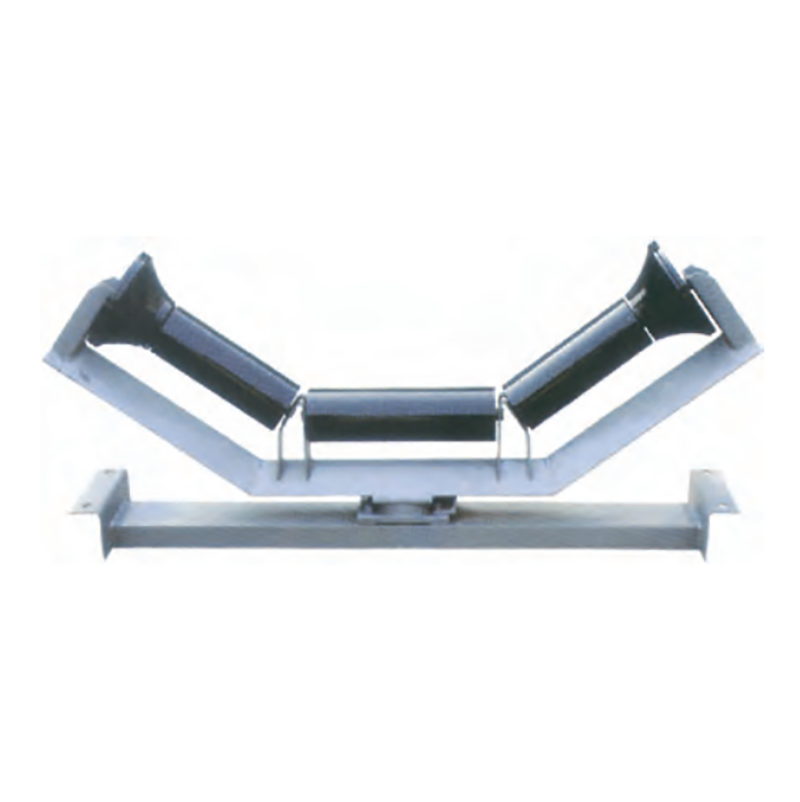
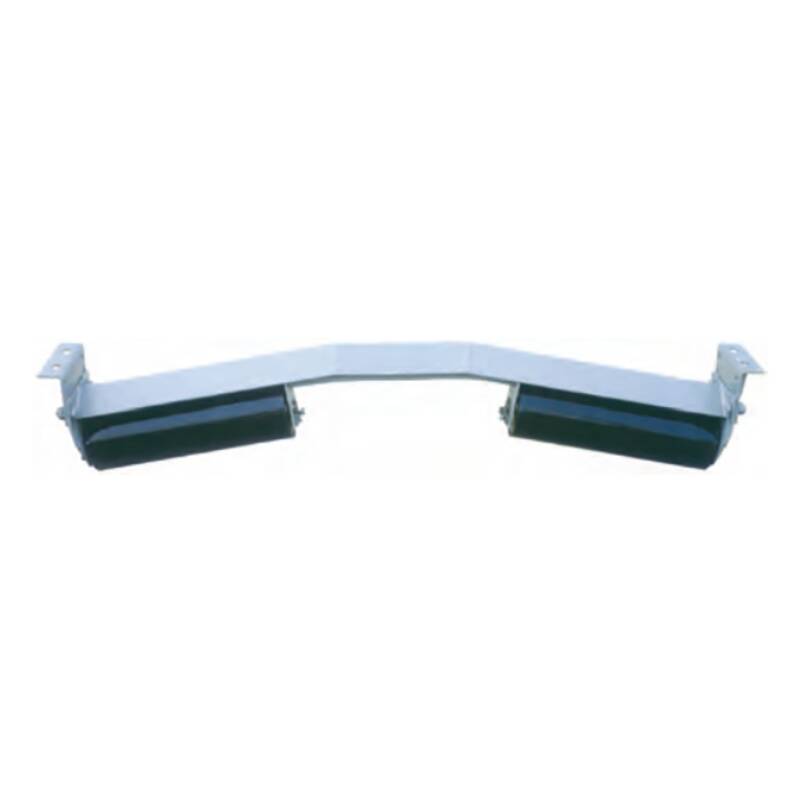
Pivot mechanism: The entire idler frame is mounted on a central pivot point (usually a swivel bearing or pivot pin). This allows the idler assembly to rotate horizontally in response to any lateral movement of the belt.
Drive Arms/Idler Rollers (Common): Most designs incorporate vertical idlers or drive arms located near the edge of the belt. When the return belt drifts and contacts one of the drive arms, the movement of the drive arms causes the idler frame to pivot, initiating a corrective steering action.
Rugged Construction: Designed for tough conditions, these idlers feature a heavy-duty steel frame, solid shafts, and well-sealed bearings. This ensures durability under impact forces, abrasive conditions, and environmental factors such as dust and moisture.
Performance Benefits
Dual Protection (Impact and Alignment): They effectively protect the return side of the conveyor belt from damage caused by falling material (return strip material or spillage), while preventing premature wear due to misalignment and rubbing against the conveyor structure.
Reduced Belt Damage, Extended Service Life: By cushioning impacts and actively correcting misalignment, these rollers significantly reduce wear, abrasion, and damage to the belt edges and surfaces, greatly extending the service life of the conveyor belt.
Automatic Tracking on the Return Side: The return side of a conveyor can also track due to a variety of factors (e.g., uneven belt tension, material buildup on return rollers, structural misalignment). The automatic correction feature is critical here, as manual adjustments are impractical and often unsafe.
Improved System Efficiency and Uptime: By preventing belt damage and eliminating the need for frequent manual adjustments, these rollers significantly improve the overall efficiency of conveyor systems and maximize uptime. They reduce unplanned maintenance and expensive belt replacements.
Enhanced Safety: Preventing belt damage, spillage (if material falls on the return), and belt failures reduces potential hazards to personnel around the conveyor, thereby improving workplace safety.
Reduced Maintenance Costs: The combined benefits of extended belt life and automatic centering directly translate into reduced maintenance labor and material costs over the life of the system.
ApplicationsMining and quarrying: Essential for transporting large quantities of coal, iron ore, copper, gravel, sand and other excavated materials.
Aggregate plants and cement plants: Used in all stages of raw material handling, crushing and final product transport.
Power plants: Primarily used for conveying coal, biomass and ash within the plant infrastructure.
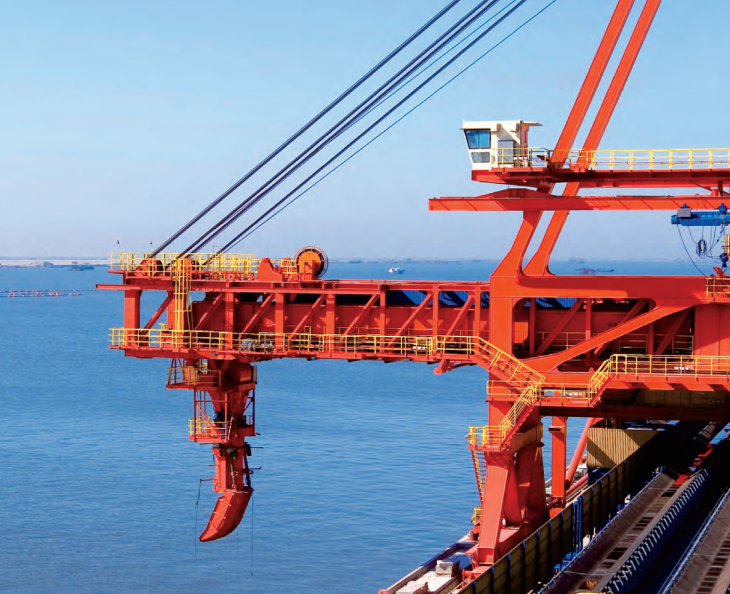
Ports and terminals: Essential for efficient loading and unloading of bulk cargoes on ships, trains and trucks.
Steel mills: Used for transporting raw materials such as iron ore and coke as well as finished products.
Grain handling and agriculture: Used in large grain silos, feed mills and other agricultural processing facilities to transport grain, seeds and fertilizers.
Manufacturing and assembly: Used for conveying raw materials, parts and finished products, especially in industries that handle bulk or heavy items.
Waste management and recycling centers: Used for transporting various types of waste and recyclable materials.
Any bulk material transport system over long distances or with large volumes: Requires continuous and efficient transport of granular, lumpy or powdered materials.
We use cookies to offer you a better browsing experience, analyze site traffic and personalize content. By using this site, you agree to our use of cookies. Privacy Policy